

Building an ADHD study focus habit isn’t about willpower — it’s about designing a system that works with your brain instead of against it. A 2022 meta-analysis in Neuropsychology Review found that people with ADHD have measurable deficits in time perception, which explains why “just sit down and study for two hours” feels impossible. Your internal clock is wired differently. The fix? External cues, micro-sessions, and rituals that bypass the need for perfect self-regulation.
Why Micro-Sessions Beat Marathon Study Blocks
Research from Kofler et al. (2010) in Journal of Abnormal Child Psychology showed that working memory overload is the primary driver of off-task behavior in ADHD — not motivation. When you chunk studying into 15- or 25-minute blocks, you reduce executive demand to a manageable level.
College students with ADHD are 2–3× more likely to land on academic probation (DuPaul et al., 2009), and the gap isn’t intelligence — it’s task initiation and sustained attention. Short sessions lower the activation energy to start.
Create an “If-Then” Study Ritual
A 2008 study by Gawrilow & Gollwitzer found that implementation intentions — simple “if-then” plans — helped children with ADHD perform comparably to neurotypical controls on task engagement. These same cue-based approaches underpin many of the environment design habits that help ADHD students build consistency. Apply this to studying:
- If I sit at my desk after lunch, then I start one 15-minute session
- If the timer rings, then I take a 5-minute break before deciding to continue
- If I finish three sessions, then I’m done for the day
Pair this with habit stacking: attach your study session to something you already do (coffee, a specific playlist, opening one particular app). The NIMH notes that external structure compensates for executive function deficits — your ritual becomes that structure.
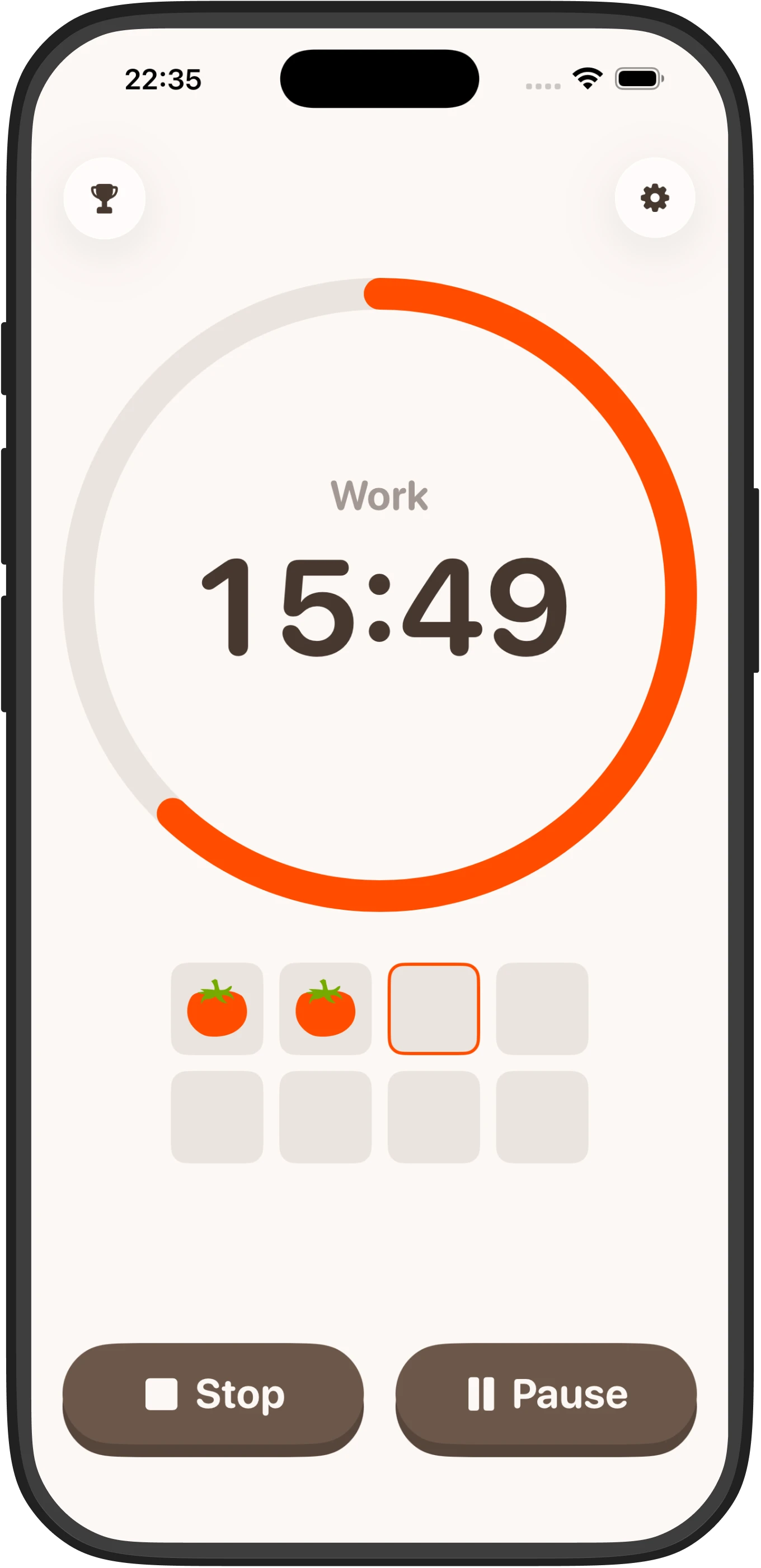
This is exactly the kind of pattern Pomo was designed around — a timer that counts work-day streaks so missing a weekend doesn’t erase your progress.
Missing a Day Won’t Ruin Everything
Lally et al. (2010) tracked habit formation in 96 people and found automaticity took a median of 66 days — but critically, missing one day didn’t derail the process. For ADHD brains that catastrophize a single skipped session into “I’ve failed,” this matters enormously. The habit survives imperfection.
Langberg et al. (2008) found that self-monitoring strategies like tracking completed sessions produced moderate-to-large improvements (effect sizes of 0.60–0.80) in academic performance for ADHD students. Even a simple check mark on a calendar counts.
FAQ
How long should ADHD study sessions be? Start with 15 minutes. Research supports shorter blocks that reduce working memory overload. Increase to 25 minutes once 15 feels automatic.
Why can’t I start studying even when I want to? ADHD impairs task initiation at a neurological level — it’s not laziness. “If-then” plans and external timers create a cue that substitutes for the internal push your brain struggles to generate.
Does the Pomodoro technique actually work for ADHD? Yes, when paired with consistent cues and rituals. The timer alone helps, but attaching it to a specific trigger (location, time, preceding habit) is what builds lasting automaticity.
How long does it take to build a study habit with ADHD? Lally’s 2010 research suggests around 66 days on average, but the range was 18–254 days. Progress isn’t linear, and missed days don’t reset the clock.
What’s the best study timer for ADHD? Look for one with short default sessions, break reminders, and streak tracking that forgives off-days. The right timer skips weekends in its streak count so a missed Saturday doesn’t reset everything.