

If you’re a college student with ADHD staring down a week of finals, a group project nobody else started, and three lectures’ worth of notes you barely remember taking — you’re not lazy. You’re running a neurotypical playbook on a brain that doesn’t work that way. These ADHD focus tips for college students come from real strategies students actually use, backed by research that explains why they work.
Here’s the thing: students with ADHD carry GPAs roughly half a letter grade lower than their peers and are twice as likely to drop out, according to data cited by the NIH. A 2009 multi-site study by DuPaul et al. found the core struggles aren’t intelligence — they’re time management, sustained attention, and study skills.
The Finals Crammer: Beating Time Blindness with Structured Intervals
Meet the pattern: it’s 11 PM, the exam is at 8 AM, and you’ve “been studying” for four hours but actually retained about twenty minutes’ worth of material. ADHD time blindness makes open-ended study sessions feel like pouring water into a colander.
A 2018 study by LaCount et al. in the Journal of College Student Psychotherapy tested structured focus intervals with visual timers on 43 college students with ADHD. The result? A significant improvement in task completion with an effect size of 0.74 — that’s a meaningful, noticeable change. The key was external time structure: a timer telling your brain when to work and when to stop.
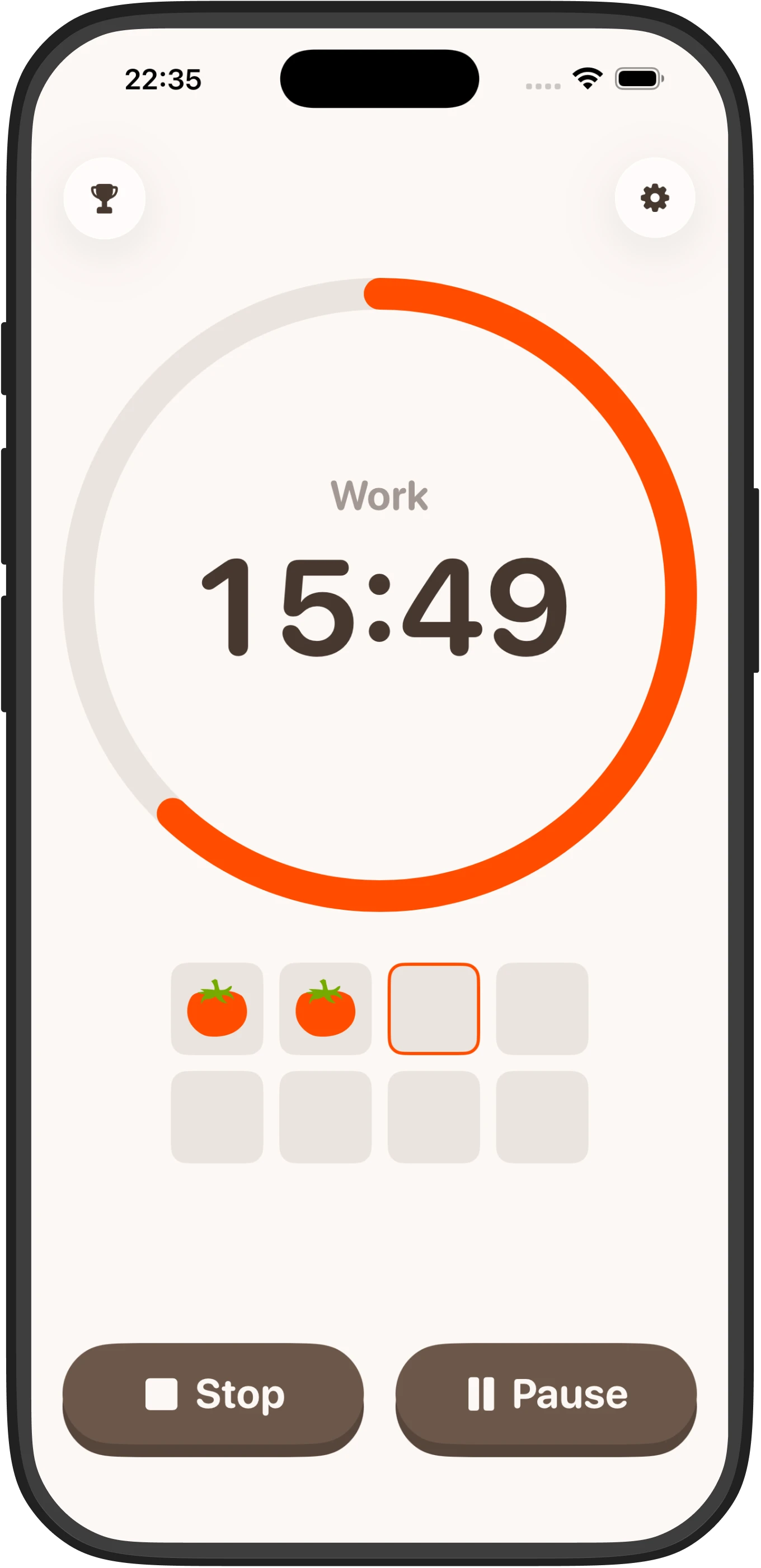
The practical version: set a 25-minute timer, study one topic, take a 5-minute break. No negotiating with yourself about “just a few more minutes.” The timer is the boss — a free timer app like Pomo makes this even easier by handling the intervals automatically so you can focus entirely on the material.
Research from Ariga and Lleras (2011) in Cognition explains the mechanism: brief diversions from a task reactivate your brain’s goal representation, essentially resetting your attention instead of letting it decay. You’re not taking breaks because you’re weak — you’re taking breaks because that’s how sustained attention actually works.
The Group Project Survivor: Body Doubling and Accountability
Group projects are ADHD kryptonite. You can’t start until the deadline triggers enough panic, and by then your teammates are furious.
A 2023 qualitative study by Sheffield et al. in Frontiers in Psychiatry found that body doubling — simply working alongside another person — was one of the most frequently cited effective strategies among adults with ADHD. The other person doesn’t need to help you. They just need to exist nearby.
Try this: schedule a “co-working” session with one group member at the library. Set a shared timer. Work on your respective sections in parallel. The social presence creates just enough external accountability to keep your executive function from wandering off.
The Lecture Zone-Out: Building Skills That Stick
If every lecture feels like someone reading a phone book in a language you almost speak, you’re not alone. Anastopoulos et al. (2021) ran a randomized controlled trial with 250 ADHD college students and found that structured skills coaching — specifically targeting organizational habits and study routines — improved executive functioning with effects that lasted at the 5-month follow-up. The effect size for organizational skills was 0.52.
What that looks like in practice: before each lecture, spend one Pomodoro session reviewing the previous class’s notes. During the lecture, write questions instead of transcripts. After, spend one more interval filling gaps. Three short structured sessions replace one long, unfocused one.
Only 25% of college students with ADHD receive formal accommodations, per Green and Rabiner (2012). You deserve support whether or not you have a letter from a disability services.
FAQ
Does the Pomodoro technique actually work for ADHD? Yes — research supports that structured intervals with external timers improve focus and task completion in ADHD students specifically (LaCount et al., 2018). The key is the external cue; don’t rely on your internal clock.
How long should ADHD study sessions be? Start with 25 minutes on, 5 minutes off. If 25 feels impossible, try 15. The interval length matters less than the consistency of taking real breaks.
What is body doubling for ADHD? Working in the physical or virtual presence of another person. It provides passive external accountability that helps initiate and sustain tasks (Sheffield et al., 2023).
How do I study for finals with ADHD? Break material into single-topic chunks, use a visual timer for each session, study with a partner when possible, and review in short intervals across multiple days rather than one marathon session.
Can ADHD students succeed without medication? Behavioral strategies like structured scheduling and skills coaching produce meaningful improvements independent of medication status (Anastopoulos et al., 2021). Many students combine both — talk to your provider about what works for you.
Finals don’t have to be a crisis every semester. Pick one strategy from above — just one — and test it this week. If you want a timer that’s built around how ADHD actually works, Pomo is free to download and takes about four seconds to start your first session.