

Finding the best productivity methods for ADHD is tricky because every strategy assumes you can “just start” — the one thing ADHD makes nearly impossible. Adults with ADHD lose an estimated 22 more days of productive work per year than neurotypical peers , yet only about 10.9% receive any behavioral skills training alongside medication, according to a 2023 CDC report . That’s a massive gap between needing help and getting it.
So which techniques actually hold up under research? Here’s an honest comparison.
Pomodoro Technique: External Time Pressure for ADHD Focus
The Pomodoro method — 25 minutes of work, 5-minute break, repeat — works by replacing your broken internal clock with an external one. A 2020 study in the Journal of Attention Disorders found that externally paced time intervals improved sustained attention and task completion by roughly 25–30% in 109 adults with ADHD compared to open-ended work blocks.
The structured breaks are the secret weapon. They reduce cognitive fatigue before you hit the wall, not after.
Best for: Grinding through boring-but-necessary tasks when you keep drifting off.
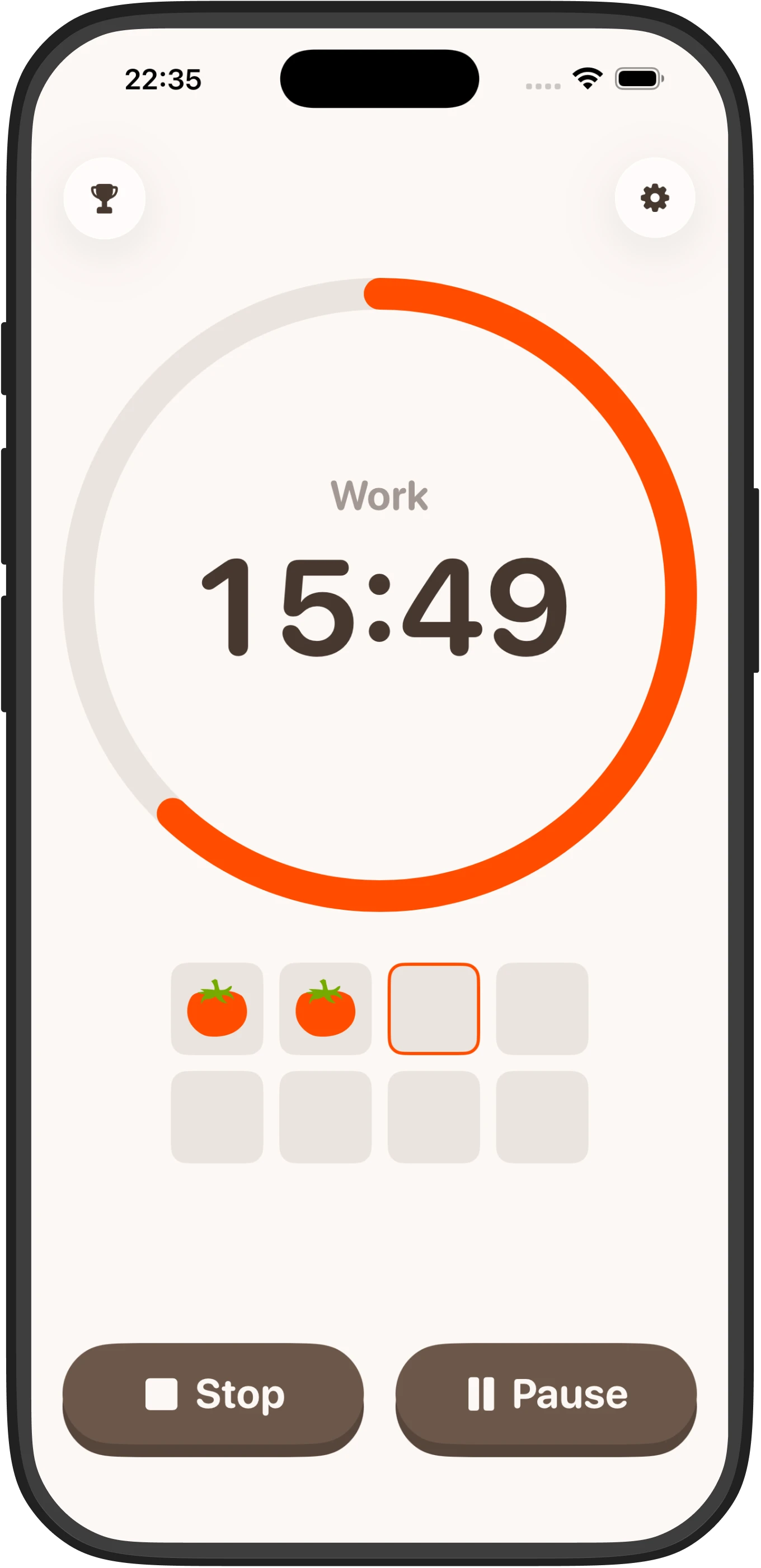
Weakness: The rigid 25/5 split doesn’t work for everyone. Some ADHD brains need 15-minute sessions; others need 40 when hyperfocus kicks in — so using a timer that lets you adjust, like Pomo, is more practical than committing to one cadence.
Body Doubling and Exercise: Two Underrated ADHD Task Initiation Strategies
Body doubling means working alongside someone — in person or on a video call — so their presence acts as an external accountability cue. A 2023 study in Frontiers in Psychology found it reduced self-reported procrastination by about 30% in 87 adults with ADHD. College students in particular have found body doubling effective — research on ADHD focus strategies for college students shows it’s among the most cited real-world tools for overcoming task initiation barriers.
Exercise before work is arguably the strongest single intervention. A 2019 meta-analysis in Neuropsychology Review covering 36 studies (combined N > 1,000) found that 20–30 minutes of moderate aerobic exercise significantly improved executive function and inhibitory control, with medium-to-large effect sizes (d = 0.43–0.65).
Best for: Exercise dominates for morning task initiation. Body doubling wins when procrastination is the main blocker.
Mindfulness and CBT Skills: Long-Term ADHD Time Management Strategies
Mindfulness-Based Cognitive Therapy (MBCT) isn’t about sitting still and thinking of nothing. A 2017 RCT from the University of Amsterdam (120 adults, published in Journal of Attention Disorders) showed an 8-week program reduced inattention and mind-wandering with a large effect size (d = 0.78–0.81), holding at 6-month follow-up.
CBT-based organizational training — task chunking, calendar blocking, prioritization — was tested at Harvard Medical School by Safren et al. in a 2012 RCT. Among 86 adults with ADHD, 58% responded to CBT skills training versus 33% in the relaxation control group.
Best for: Mindfulness helps with emotional regulation and impulse control. CBT skills build durable habits over months.
How to Combine Methods for Your ADHD Brain
No single method covers everything. The research points toward stacking:
- Exercise in the morning (task initiation boost)
- Pomodoro-style timers during work blocks (sustained attention)
- Body doubling for tasks you keep avoiding
- Mindfulness or CBT skills for the long game
The key is external structure. Russell Barkley’s executive function model explains it simply: ADHD impairs self-regulation, so you need the environment to do some of the regulating for you. A timer on your phone counts.
A Pomodoro timer built for ADHD brains — with flexible session lengths, streak tracking that skips weekends, and zero setup friction — is worth trying alongside whatever else is working for you.
FAQ
Does the Pomodoro technique actually work for ADHD? Yes, with modifications. Research shows externally timed intervals improve ADHD task completion by 25–30% . Adjusting session length to match your attention window makes it more effective.
What is the best focus method for ADHD adults? No single method wins alone. Exercise before work has the strongest standalone evidence, but combining it with timed work intervals and body doubling covers more executive function gaps.
How do you stay productive with ADHD without medication? Exercise, structured time intervals, body doubling, and CBT-based organizational skills all have RCT evidence supporting them as non-pharmacological approaches. Most adults benefit from stacking two or more.
Is body doubling better than the Pomodoro technique for ADHD? They solve different problems. Body doubling helps you start tasks; Pomodoro helps you sustain focus once you’ve started. Using both is the strongest combo for procrastination-prone work.
How long should Pomodoro sessions be for ADHD? The classic 25 minutes works for many, but some ADHD brains do better with 15- or even 10-minute blocks for aversive tasks. Experiment and track which length gets you the most completed sessions.