

You’ve probably been told to try harder. Make a schedule. Set a deadline. Just focus.
And you’ve probably tried all of it — maybe multiple times, with genuine effort — and still found yourself staring at a task you care about, fully intending to start, and going completely blank. Or spiraling into something else entirely.
That’s not a character flaw. It’s a neurological mismatch. Your brain is not running on the same motivational fuel as the advice you’ve been given.
Your Brain Runs on Dopamine, Not Discipline
The ADHD brain has a dopamine availability problem. A 2009 PET scan study by Volkow et al. published in JAMA compared adults with ADHD to neurotypical controls and found lower dopamine receptor availability in the prefrontal cortex — the region responsible for planning, initiating tasks, and sustaining attention.
That matters because dopamine isn’t just about pleasure. It’s the signal that tells your brain: this is worth doing right now. When that signal is chronically underactive, neutral tasks — the ones that aren’t urgent, scary, or fascinating — simply don’t register as compelling enough to start.
Neurotypical brains can generate that signal through intention alone: “I decided to do this, so I will.” ADHD brains often cannot. The intention exists. The follow-through pathway is impaired.
This relates to what psychiatrist Russell Barkley describes in his research as a deficit in self-regulation — difficulty using future consequences to motivate present behavior. You can know a deadline is real and still feel no pull toward the work, because “two weeks from now” doesn’t feel real in the moment. It’s abstract. It doesn’t release dopamine.
What does release dopamine — reliably, powerfully — is genuine interest.
The Interest-Based Nervous System
The concept of an “interest-based nervous system” in ADHD describes the observation that ADHD motivation appears to operate on a fundamentally different architecture than neurotypical motivation. Where most people can activate on command — through importance, obligation, or mild pressure — people with ADHD tend to activate primarily through:
- Interest — the task is genuinely engaging
- Challenge — there’s a competitive or difficult element
- Novelty — the task is new or unfamiliar
- Urgency — a real, imminent deadline finally makes the future feel present
This isn’t merely a preference. It reflects how dopamine-mediated motivation functions in ADHD neurobiology. Research suggests that identical tasks framed as interesting versus obligatory produce significantly different engagement levels in ADHD — improvements well beyond what effort alone would predict.
Why Deadlines Feel Fake (Until They Don’t)
One of the most disorienting ADHD experiences is knowing a deadline is important and feeling nothing — until the deadline is hours away, at which point everything floods in at once.
The science behind this relates to temporal discounting and executive dysfunction in ADHD. Deadlines that are days or weeks away may not trigger the same sense of urgency as they do for neurotypical brains. The brain doesn’t automatically feel the gradient of approaching time the same way.
But here’s what research suggests: interest bypasses this timing problem. When a task is genuinely engaging, it activates reward circuitry directly — the same system that responds to novel or personally meaningful information. This pathway doesn’t require temporal reasoning. It can fire in the present tense.
This is why ADHD procrastination isn’t laziness. It’s a structural mismatch between the motivational systems the task requires and the ones the ADHD brain has reliably available.
Novelty and Engagement
Research on ADHD and attention suggests that ADHD brains show heightened initial responses to novel stimuli. However, novelty also tends to lose its potency with repeated exposure — the same stimulus that was compelling at first engagement becomes less so over time.
This explains a cycle many ADHD people recognize: enthusiastic start, declining engagement, abandonment, guilt — repeat.
It also suggests a practical strategy: instead of trying to stay interested in the same unchanging task, engineer variation into the work itself. Change your environment. Reframe the task as a challenge. Add a time constraint that creates mild structure.
What External Timers Actually Do
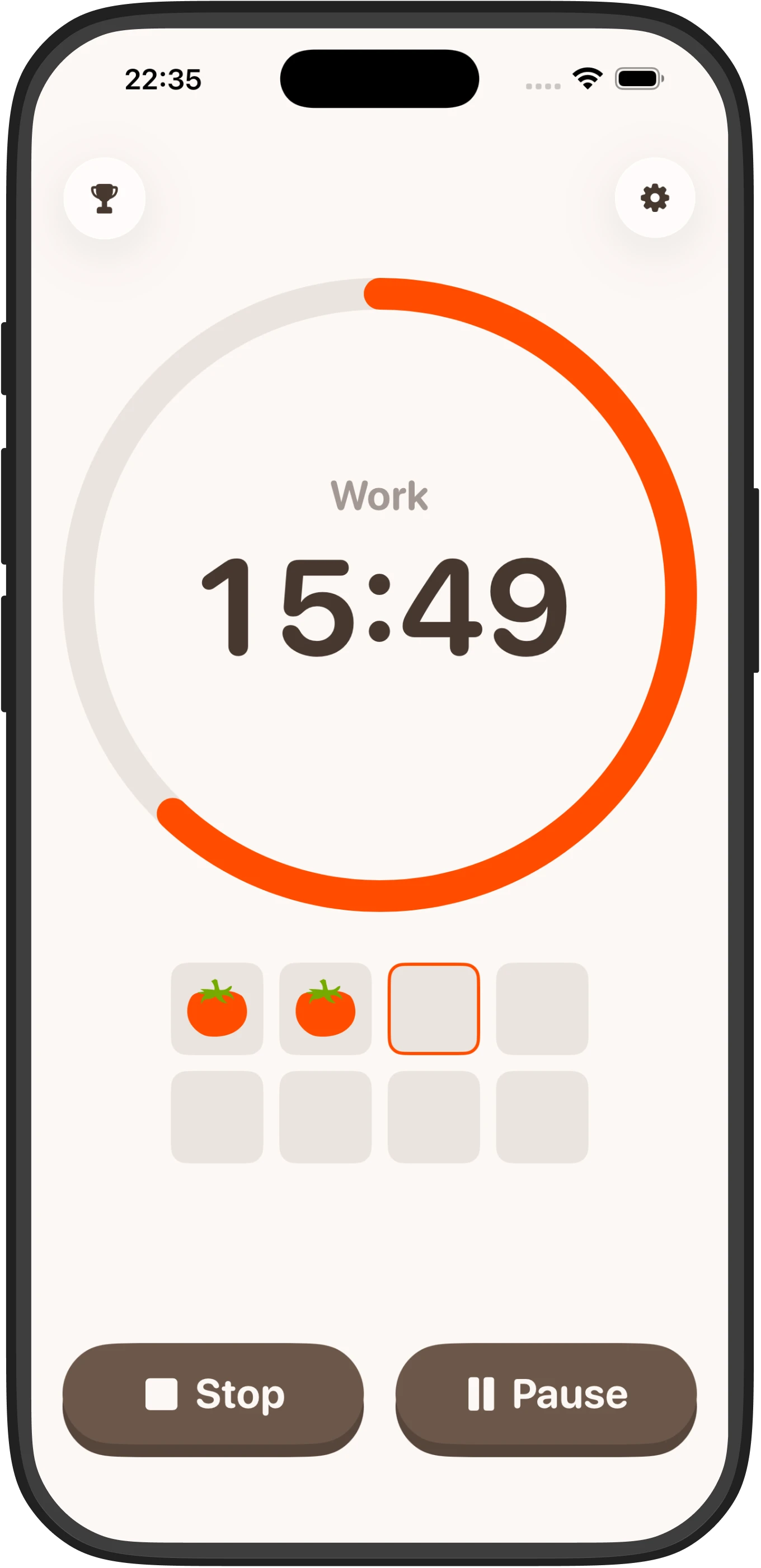
A countdown timer does something structurally important: it makes time visible and creates a defined work period. For a brain that struggles to feel temporal distance, seeing time pass can create structure and mild urgency.
It also introduces novelty and bounded focus into neutral tasks. “Can I finish this section before the timer ends?” creates a contained challenge — one of the pathways that ADHD engagement systems respond to reliably.
The Pomodoro Technique fits this pattern well. Twenty-five minutes is short enough to feel approachable, long enough to get meaningful work done, and the ticking countdown creates focused urgency. Timed intervals aren’t just a productivity fad — they address a real activation mechanism.
How to Trigger Interest When There Is None
This is the harder problem. Not every task can be made interesting. Some things are just obligatory.
But you can work around the interest deficit with structural strategies:
Pair the task with something engaging. Music, a specific playlist, a beverage you reserve for work sessions — these create a context associated with engagement, lowering the activation threshold slightly.
Make it a game. Set a micro-challenge: finish this section before the timer runs out. Respond to these emails in under ten minutes. This co-opts challenge-based activation without requiring the work itself to be interesting.
Use body doubling. Working in the presence of another person — even a stranger at a café, or a virtual co-working session — can provide enough ambient structure to support focus. This doesn’t require willpower.
Break the task into the smallest possible first action. Not “write the report” but “open the document.” Not “clean the kitchen” but “put one thing away.” Reducing initiation friction addresses a core ADHD challenge.
FAQ
Why can’t people with ADHD just use willpower to focus?
ADHD brains have lower dopamine receptor availability in the prefrontal cortex, meaning the neurological signal that says “this is worth doing” doesn’t activate through intention alone. Willpower relies on that signal being available, so willpower alone often fails regardless of effort.
Is ADHD procrastination just laziness?
No. ADHD procrastination is a structural mismatch between how the brain’s motivational systems work and what the task demands. The brain physically doesn’t register non-urgent tasks as compelling to start, even when you know they’re important.
Why do ADHD deadlines suddenly feel urgent at the last minute?
ADHD brains struggle with temporal discounting — they don’t automatically feel the gradient of approaching time the way neurotypical brains do. When a deadline is hours away, it finally becomes present enough to trigger urgency and dopamine release.
Can external timers and the Pomodoro Technique actually help ADHD motivation?
Yes. Timers make time visible and create bounded challenges, which activates ADHD engagement systems reliably. A twenty-five minute countdown provides structure, novelty, and mild urgency without requiring the task itself to be interesting.
What’s the difference between interest-based and discipline-based motivation?
Neurotypical brains can activate through intention and importance alone, while ADHD brains primarily activate through genuine interest, challenge, novelty, or real urgency. This isn’t a preference—it reflects how dopamine-mediated motivation functions differently in ADHD neurobiology.