

Rigid schedules sound great on paper. But if you have ADHD and work from home, you already know the problem: ADHD focus tips for remote work that depend on willpower and self-regulation are asking your brain to do the exact thing it struggles with most. ADHD researcher Russell Barkley calls it a disorder of performance, not knowledge — you know what to do, you just can’t make yourself start.
The fix isn’t a tighter calendar. It’s small, repeatable rituals that externalize structure so your environment does the heavy lifting.
1. Build a Two-Minute Startup Sequence (Not a Morning Routine)
Forget the 90-minute morning routine influencers sell. You need a task-initiation trigger — a tiny, consistent sequence that signals “work mode.” Something like: fill water bottle → put on headphones → open one tab. This kind of daily anchor ritual is one of the most consistently effective external cues in the research.
A 2008 study by Gawrilow & Gollwitzer found that simple “if-then” plans dramatically improved task initiation in people with ADHD, with large effect sizes (d > 0.90). The ritual doesn’t need to be big. It needs to be the same every time.
2. Make Time Visible With an External Timer
Time blindness is real. A 2021 study in the Journal of Attention Disorders confirmed that adults with ADHD show significant impairments in time estimation and reproduction tasks compared to controls. The researchers specifically recommend external temporal cues — visible countdown timers, alarms, structured intervals.
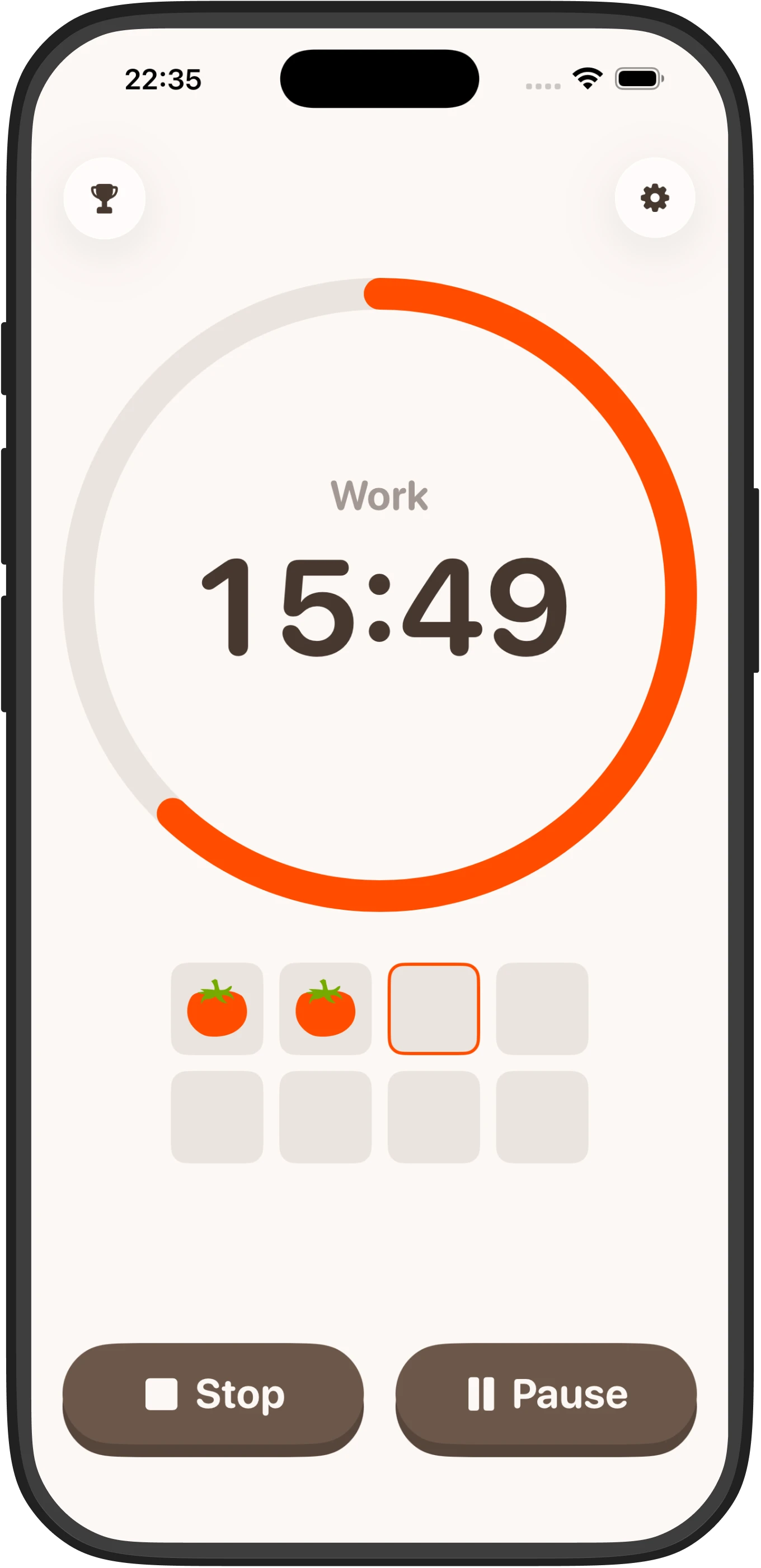
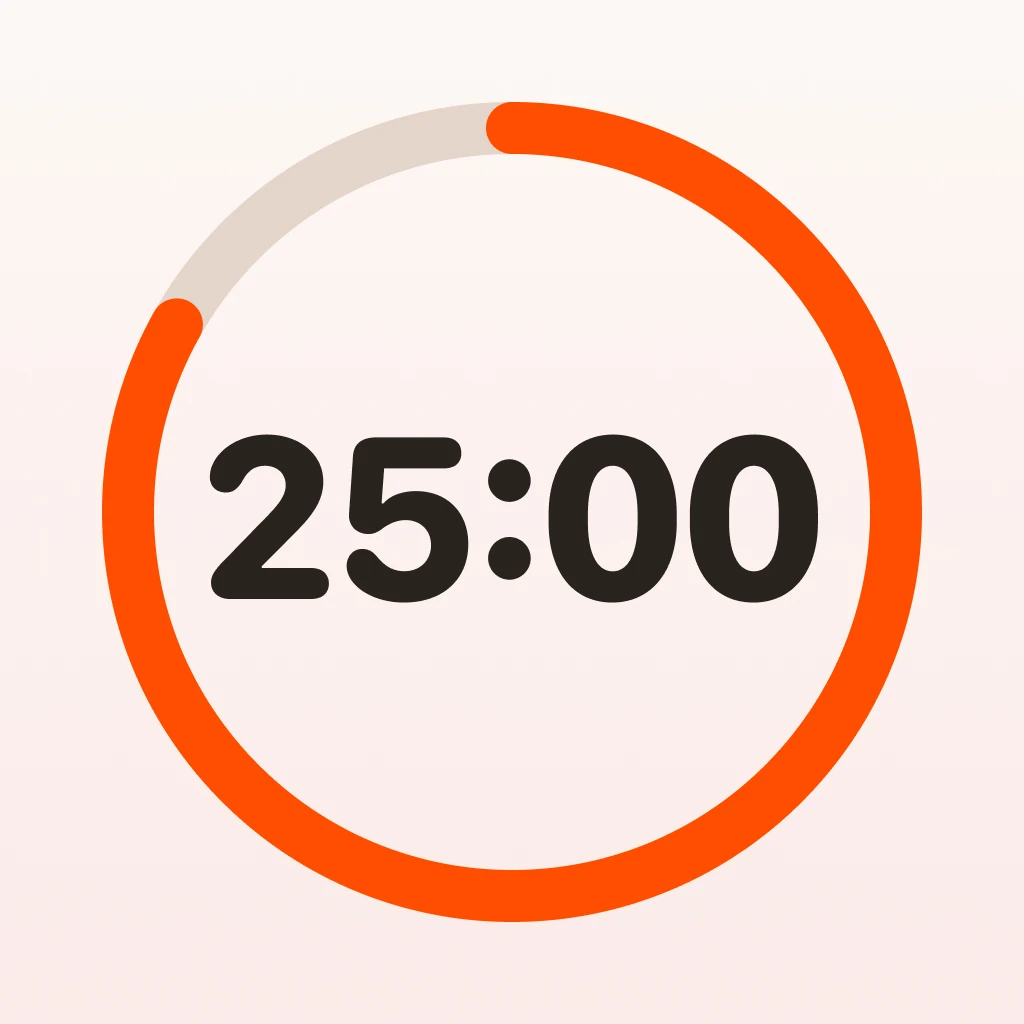
This is why a Pomodoro-style timer works so well for ADHD brains — you’re not guessing how long 25 minutes feels; you’re watching it. Pomo for iPhone was built around exactly this idea: a visual countdown that makes time concrete instead of abstract.
3. Add a Movement Transition Between Tasks
Don’t just switch tabs. Stand up. Walk to the kitchen. Do ten jumping jacks. A 2020 study in Neural Plasticity found that even a single bout of moderate exercise significantly improved executive function in adults with ADHD — and the ADHD group benefited more than controls.
You don’t need a gym session. You need 3–5 minutes of movement between work blocks to reset your attention system.
4. Try Virtual Body Doubling
Working alongside another person — even silently, even on video — provides external regulation your ADHD brain craves. Cheek et al. (2022) presented one of the first academic frameworks for body doubling at ABCT, proposing that social presence compensates for self-regulation deficits. For a broader comparison of body doubling against other ADHD focus strategies, the evidence consistently places it among the most practical options for task initiation. Platforms like Focusmate or a simple “cameras on” session with a friend can replicate the accountability of an office.
5. Shrink Your Workspace Decisions to Zero
Decision fatigue hits harder with ADHD. Same desk, same chair, same playlist. Research on organizational routines and ADHD consistently shows that environmental consistency predicts better output independent of medication status (Langberg et al., 2013).
6. Set “Done Enough” Criteria Before You Start
Perfectionism and ADHD hyperfocus are a dangerous combo. Before each work block, write one sentence: “This task is done when ____.” It prevents the rabbit hole.
7. Protect Transitions, Not Just Focus Time
Most productivity advice optimizes during work. But for ADHD, the hardest part is the shift between tasks. Stack your rituals at transition points: end of timer → stand up → movement → startup sequence → next block.
FAQ
How do I focus with ADHD while working from home? Use external cues instead of willpower: visible timers, consistent start-up rituals, body doubling, and short movement breaks between tasks. Structure your environment, not just your calendar.
Does the Pomodoro Technique work for ADHD? Yes — Harvard Health recommends timed work intervals as a core ADHD coping strategy. The key is a visual timer so you can see time passing.
What is body doubling for ADHD? Working in the presence of another person (in-person or virtual) to borrow external accountability. It’s one of the most effective ADHD remote work strategies for staying on task.
Why do rigid schedules fail for ADHD? They depend on self-regulation and time awareness — the exact executive functions ADHD impairs. Cue-based rituals work better because they’re triggered by context, not clock time.
How many Pomodoro sessions should I do per day with ADHD? Start with 3–4 and build up. Consistency matters more than volume. Even two focused sessions beat eight hours of scattered effort.