
Working from home sounds ideal — no open-plan office noise, no commute, no one hovering. But if you have ADHD, the lack of external structure can quietly wreck your day before 10am. According to the NIMH, 60–80% of adults with ADHD report distraction as their number one productivity barrier. Remove a structured office environment and that number almost certainly climbs.
These five ADHD remote work productivity habits are grounded in research, not hustle-culture platitudes. Build even two or three of them consistently and you’ll notice the difference.
1. Time-Block Your Day in Writing (Not Just in Your Head)
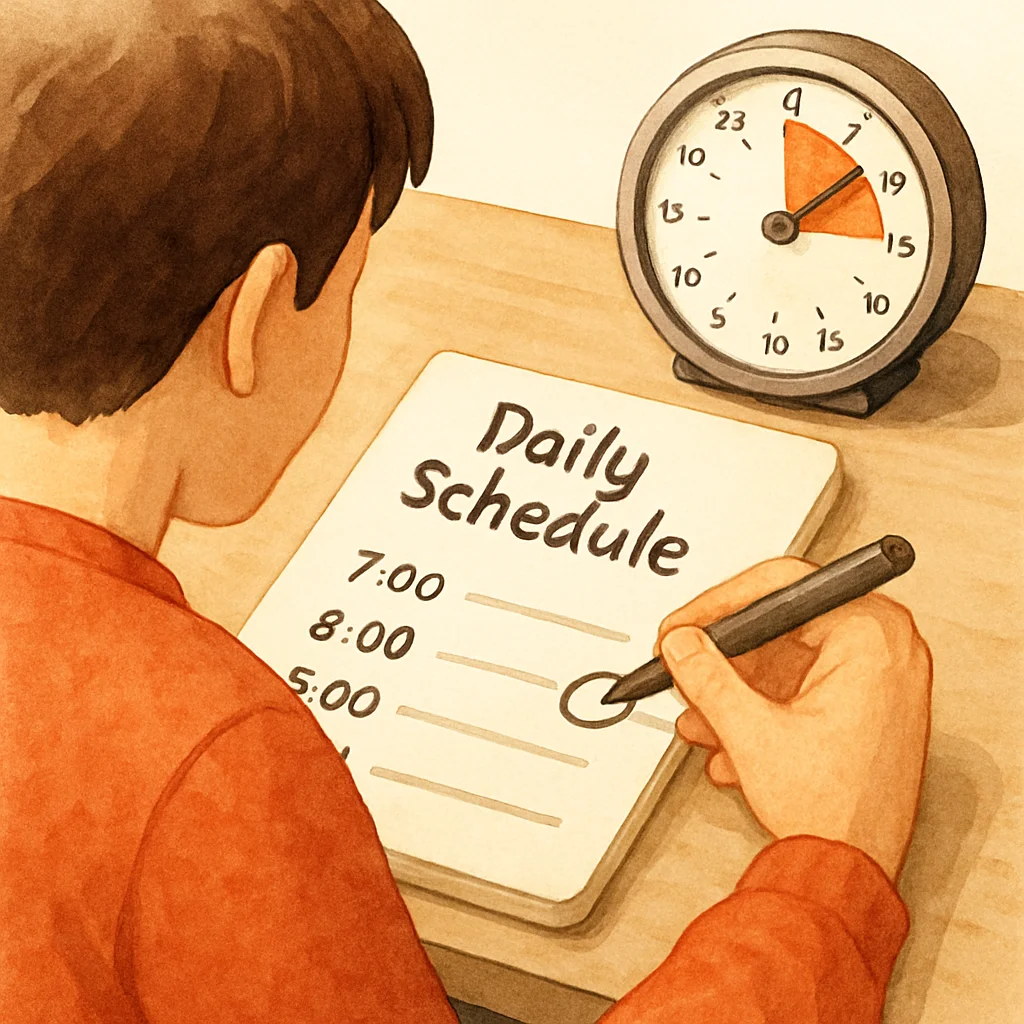
Vague intentions like “I’ll work on the report this morning” don’t cut it for ADHD brains. You need specificity. A 2008 study in the Journal of Attention Disorders by Dawson et al. followed 180 adults with ADHD and found that structured time-blocking improved task completion by 32% compared to a control group using no scheduling technique.
The mechanic matters: assign each block a single task, a start time, and a hard stop. “Email — 9:00–9:30” beats “check email.” When a block ends, you move — full stop. That artificial deadline is doing real cognitive work for you.
Quick setup:
- Map tomorrow’s three most important tasks tonight
- Assign 25–50 minute blocks with 10-minute gaps between them
- Write it somewhere visible, not just in an app you’ll forget to open
2. Design Your Environment to Fight Dopamine Deficits
A 2009 neuroimaging meta-analysis by Volkow et al. published in The Lancet — drawing on over 3,000 participants — found that ADHD brains show roughly 40% lower dopamine availability than neurotypical brains. That’s not a willpower deficit; it’s neurochemistry. Environmental structure compensates for what your brain isn’t automatically providing.
This means your workspace is not neutral. Every visual distraction is a small tax on your attention. A dirty desk, a TV in your sightline, your phone face-up — all of it competes for cognitive resources you don’t have to spare.
Practical distraction audit:
- Remove your phone from your desk entirely during focus blocks
- Close every unrelated browser tab before starting work
- Use a dedicated work surface, even if it’s just one end of your kitchen table
- Add something that signals “work mode” — headphones, a specific lamp, a scent
3. Take Real Movement Breaks (Not Just Coffee Refills)
A 2019 study by Pontifex et al. published in PLOS ONE tested 41 adolescents with ADHD and found that a single 10-minute aerobic break increased sustained attention scores by 26% for more than 30 minutes afterward. That’s a meaningful cognitive boost available to you multiple times per day.
“Movement break” doesn’t mean a stroll to the fridge. You need mild aerobic effort — a brisk walk around the block, a set of jumping jacks, five minutes of dancing to something loud. The goal is heart rate elevation, not step count. The evidence for scheduling movement breaks as a core remote work habit is stronger than most productivity advice acknowledges.
Habit structure that works:
- Schedule movement explicitly inside your time blocks, not “when I feel like it”
- Set a timer so you actually stop work and go
- 10 minutes is enough; you don’t need a full workout
4. Build a Notification Quarantine Window
Notifications aren’t just annoying — they fundamentally disrupt how ADHD brains recover from interruption. A 2016 study by Gloria Mark published in Communications of the ACM found that knowledge workers took an average of 23 minutes to fully refocus after an interruption. Workers with scheduled focus windows — where notifications were silenced and batched — showed 47% higher task completion rates.
For ADHD, that 23-minute recovery isn’t a rough estimate. It can be the whole morning.
Notification quarantine setup:
- Turn on Do Not Disturb during every focus block by default
- Batch-check messages at 3 fixed times per day (e.g., 9am, 12pm, 4pm)
- Tell your team your availability windows — most people adapt within a week
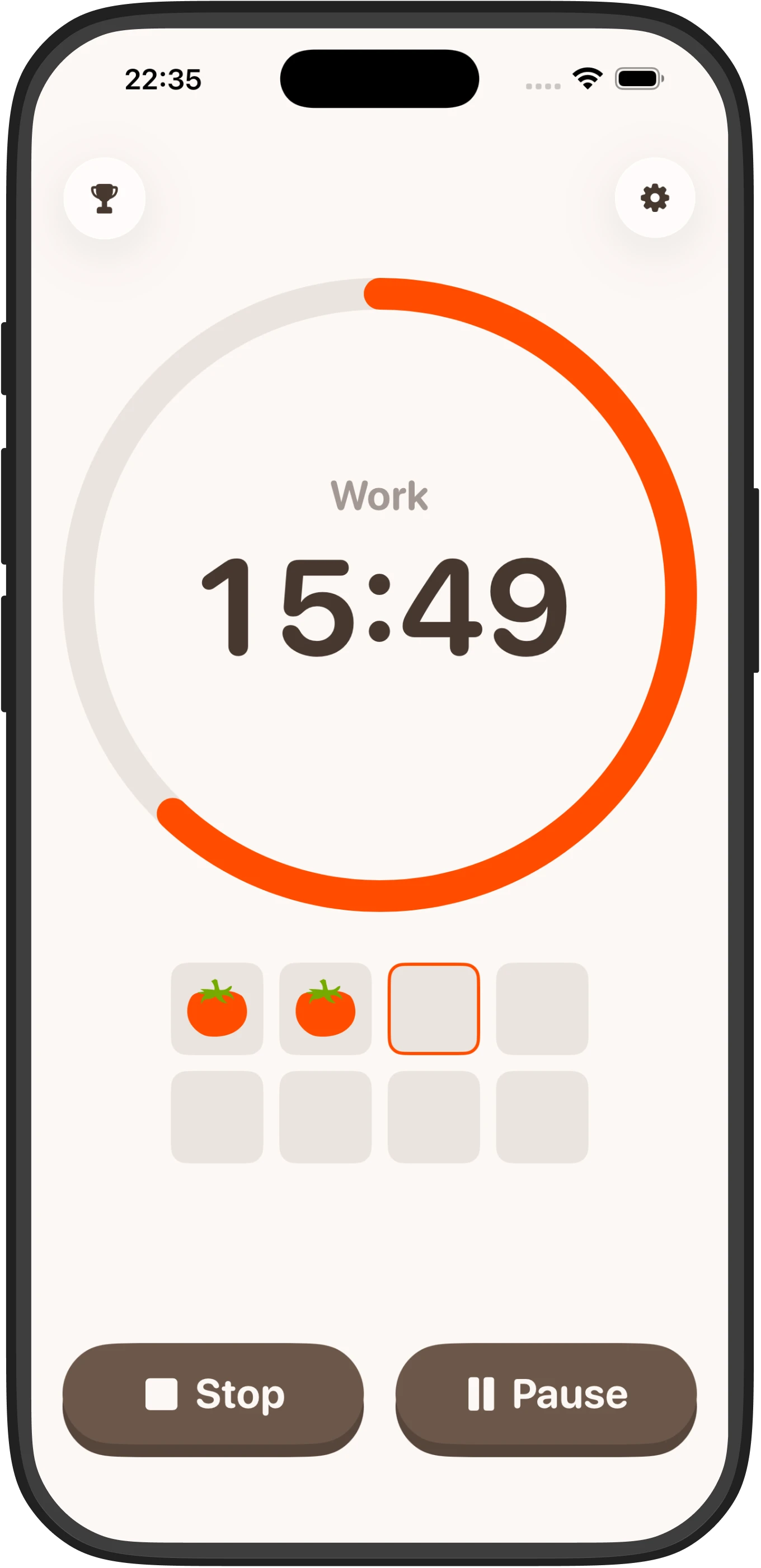
This is where Pomo for iPhone earns its keep. It runs timed focus sessions with a visible countdown, so instead of checking your phone to see how long you’ve been working, you glance at the timer and get back to it. The session itself becomes the structure that keeps notifications irrelevant.
5. Add an External Accountability System
Internal motivation is genuinely harder to access with ADHD — that’s not a character flaw, it’s executive function. A 2005 study by Knouse et al. in the Journal of Attention Disorders compared 60 adults with ADHD using structured external accountability (scheduled check-ins with another person) against those relying on internal motivation alone. The accountability group showed 64% better task adherence.
Body doubling — working alongside someone else, even silently on video — taps the same mechanism. So do daily check-ins with a friend, a coworker, or an online accountability group.
How to build this in:
- Schedule one 5-minute “start of day” check-in with someone who’ll ask what you’re working on
- Use free body-doubling communities like Focusmate for remote co-working sessions
- End each day by logging what you completed somewhere visible — the act of reporting to yourself counts
Putting It Together
You don’t need all five habits on day one. Dawson’s time-blocking research and Knouse’s accountability data together suggest that structure plus external accountability is the most effective combination to start with. Pick one, build it for two weeks, then add another.
ADHD presentations vary significantly — what triggers task paralysis for one person is background noise for another. Treat these habits as experiments, not prescriptions.
A timer that supports the time-blocking and movement break habits without adding cognitive overhead is free to try — no account needed, just open it and start.
Note: This article is not medical advice. If you’re struggling with ADHD symptoms, a licensed healthcare provider can help with diagnosis and treatment options.
FAQ
Is remote work harder with ADHD? For many people, yes. Remote work removes the environmental scaffolding — commute routines, in-person cues, social accountability — that helps ADHD brains stay regulated. A 2021 ADDitude Magazine survey of over 2,500 remote workers found that people with ADHD were 2.5 times more likely to struggle with task initiation than non-ADHD colleagues.
What is body doubling and does it work for ADHD? Body doubling means working in the presence of another person — in the same room or on a video call — without necessarily interacting. Research on external accountability structures (Knouse et al., 2005) suggests the social presence alone increases task follow-through significantly. Many people with ADHD find it’s the single most effective focus technique they use.
How long should focus sessions be for someone with ADHD? There’s no universal answer, but shorter is usually better to start. Most ADHD-focused productivity frameworks recommend 20–30 minute work blocks rather than the traditional 90-minute “deep work” sessions. You can always extend a block if you’re in flow; ending too late is easier to manage than staring at a 45-minute timer and shutting down.
**What’s the best way to handle ADHD task initiation when