

Let’s be honest: mornings with ADHD can feel like you’re trying to solve a Rubik’s cube while underwater. Your brain won’t cooperate, you’ve already forgotten what you came into the bathroom for, and somehow you’re simultaneously early and late for everything.
If you’ve ever stood in front of your closet for 20 minutes unable to decide what to wear, or realized at 10 AM that you forgot to eat breakfast (again), you’re not alone. Adults with ADHD lose an average of 22 days per year to procrastination and time management issues, according to a 2020 study published in the Journal of Attention Disorders. And mornings? They’re where the battle is won or lost.
The good news is that you don’t need superhuman willpower or a complete personality transplant. You need a system that works with your ADHD brain, not against it. This adhd morning routine checklist is built around how executive dysfunction actually works—reducing decisions, leveraging dopamine spikes, and creating fail-safes for when your brain inevitably goes offline.
Why Traditional Morning Routines Fail for ADHD
Before we jump into the checklist, let’s talk about why every generic “5 AM miracle morning” routine you’ve tried has crashed and burned.
Traditional morning routines assume your executive function is ready to go the moment your alarm rings. They expect you to make dozens of micro-decisions, maintain consistent willpower, and somehow remember everything without external support. For an ADHD brain that’s still booting up, this is like asking someone to run a marathon before they’ve had their coffee.
People with ADHD are 3-4 times more likely to experience sleep problems than those without ADHD, according to a 2019 review in Sleep Medicine Reviews. That means you’re not just dealing with executive dysfunction—you’re dealing with it while potentially sleep-deprived, which compounds everything.
The other issue? Decision fatigue. Research in the Journal of Personality and Social Psychology indicates that consistent morning routines can reduce decision fatigue by up to 40%. But here’s the catch: the routine itself has to be so streamlined that following it doesn’t create more decisions than it eliminates.
That’s what this checklist does. Each step is designed to minimize cognitive load while maximizing the neurochemical support your ADHD brain needs to function.
The Science Behind ADHD Morning Routines
Your ADHD brain has a dopamine regulation problem. That’s not a character flaw—it’s neurobiology. The prefrontal cortex, which handles executive functions like planning, prioritizing, and impulse control, doesn’t get the dopamine signaling it needs. This is why you can hyperfocus on something interesting for six hours but can’t make yourself do a five-minute task you’re dreading.
Morning routines matter because they work with your natural dopamine patterns. Exercise, for example, increases dopamine levels by 40-50%, according to research in Neuroscience & Biobehavioral Reviews. That boost doesn’t just help you feel good—it literally improves your brain’s ability to focus, plan, and execute tasks.
The other science-backed element is something called “implementation intentions.” Instead of vague goals like “be productive,” you create specific if-then plans: “If I finish brushing my teeth, then I take my medication.” This removes the decision-making burden and creates automatic behavioral chains.
External structure compensates for weak internal structure. That’s the whole game.
Your 12-Step ADHD Morning Routine Checklist
Here’s your complete adhd morning routine checklist. Print it out, save it to your phone, or write it on your bathroom mirror. Whatever it takes to make it visible and accessible.
Step 1: Same Wake Time (Even Weekends)
Set your alarm for the same time every single day, including weekends. Yes, even Saturday.
Your ADHD brain craves consistency more than most people’s brains do. Variable wake times throw off your circadian rhythm, making mornings even harder. Pick a realistic wake time—not your fantasy “I’ll be a morning person” time, but the actual time you can consistently manage.
The National Institute of Mental Health notes that approximately 4.4% of adults in the United States have ADHD, and sleep consistency is one of the most commonly overlooked interventions. Your brain needs predictability to function optimally.
Implementation tip: Put your phone across the room so you have to physically get up to turn off the alarm. The act of standing activates your brain faster than lying in bed hitting snooze.
Step 2: Immediate Hydration (Before Anything Else)
Before you check your phone, before you go to the bathroom, before you do anything else: drink a full glass of water that you’ve left on your nightstand the night before.
Your brain is roughly 75% water, and you’ve gone 7-8 hours without hydration. Dehydration impairs executive function, working memory, and attention—all things your ADHD brain already struggles with. This is the easiest neurochemical boost you’ll get all day.
Checklist hack: Use a water bottle with time markers. It removes the decision of “how much water?” and gives you a visual completion cue that hits that ADHD reward center.
Step 3: No Phone for 30 Minutes
This is the hardest one. Your dopamine-starved brain wants that phone hit immediately. Resist.
Social media, emails, and news create a dopamine spike followed by a crash, and they fragment your attention before you’ve even built any focus to fragment. They also trigger the comparison trap and anxiety spirals that derail your entire morning.
Alternative dopamine sources: Movement (next step), music while you get ready, or a quick conversation with someone you live with. Anything that doesn’t involve infinite scrolling.
Step 4: 10-Minute Movement Session
Remember that 40-50% dopamine boost from exercise? This is where you get it.
You don’t need a full workout. Ten minutes of movement that gets your heart rate up is enough to trigger the neurochemical cascade your ADHD brain needs. This could be:
- A brisk walk around the block
- Jumping jacks and push-ups in your living room
- A short yoga flow
- Dancing to two or three high-energy songs
- Following a 10-minute YouTube workout video
The key is intensity, not duration. You’re trying to stimulate dopamine production and increase blood flow to your prefrontal cortex.
ADHD-friendly tip: Pick something you actually enjoy. If you hate running, don’t force yourself to run. The dopamine benefit disappears if the activity itself creates resistance and dread.
Step 5: Shower and Sensory Routine
Your shower isn’t just about hygiene—it’s a sensory reset for your overstimulated or understimulated nervous system.
Many people with ADHD have sensory processing differences. A consistent shower routine with specific temperatures, textures, and scents creates a reliable sensory experience that grounds you in your body and signals to your brain that the day is officially starting.
Sensory checklist:
- Water temperature that feels right for your nervous system (hot to wake up, or alternating hot/cold for extreme alertness)
- Shower products with scents that either energize or calm you
- A specific order of operations (hair, body, face) so you don’t forget steps
- A shower timer if you tend to lose track of time
Step 6: Medication and Supplements (With Protein)
If you take ADHD medication, this is your critical timing window. Most stimulant medications work best when taken with protein and at the same time each day.
Take your medication, then eat something with protein within 15 minutes. Protein slows the absorption rate and helps prevent the crash later. It also supports sustained dopamine production throughout the morning.
Protein options that take under 5 minutes:
- Greek yogurt with nuts
- Hard-boiled eggs (prep the night before)
- Protein shake or smoothie
- Peanut butter on whole grain toast
- Cheese and crackers
\
Step 7: Get Dressed Immediately (Use a Uniform)
Decision fatigue is real, and choosing an outfit burns through executive function you need for actual important decisions.
Create a morning “uniform”—essentially the same outfit or outfit formula every day. Steve Jobs did this. So did Einstein. They weren’t being boring; they were eliminating unnecessary cognitive load.
ADHD uniform strategies:
- Lay out clothes the night before when your executive function is less depleted
- Keep a “morning uniform” section in your closet with pre-approved outfits
- Use the weather app the night before to eliminate the “what’s the weather?” decision
- Stick to a simple color palette so everything matches by default
The goal is to go from “I need to get dressed” to being dressed in under 3 minutes with zero decisions.
Step 8: Make Your Bed (Yes, Really)
This sounds like generic productivity advice, but it serves a specific function for ADHD brains: it’s your first completed task of the day.
Task completion triggers a small dopamine release. Your brain gets a tiny reward for following through on something. That momentum matters. One completed task makes the next task feel more achievable, creating a positive feedback loop instead of the usual ADHD paralysis spiral.
It also prevents the “guess I’ll just get back in bed” temptation when your brain rebels against being awake.
Quick method: You don’t need hospital corners. Pull up the comforter, throw the pillows on top, done. Thirty seconds, maximum.
Step 9: Visual Day Planning (5 Minutes Max)
Here’s where a lot of ADHD morning routines go wrong: they try to do too much planning. You don’t need to map out your entire week. You need to know what your brain is doing for the next 4-6 hours.
Look at your calendar or planner and identify your top three priorities for the day. Write them down somewhere visible. Not ten things. Not “get organized.” Three specific, concrete tasks.
Planning format that works:
- One high-priority task (the thing that would make today a success)
- One medium task (something that needs to happen but isn’t critical)
- One easy task (your backup for when executive function fails)
Step 10: Environmental Setup
Your environment either supports your ADHD brain or sabotages it. Spend two minutes creating a workspace that works with your neurology.
Quick environmental checklist:
- Clear your desk of yesterday’s chaos (or use a clean space if your desk is beyond help right now)
- Get everything you need for your first task within arm’s reach
- Put your phone in another room or in a drawer with Do Not Disturb enabled
- Set up any tools or apps you need (timers, website blockers, etc.)
- Adjust lighting and temperature to whatever helps you focus
The goal is to remove friction from starting. Every obstacle between you and beginning your work is an opportunity for your ADHD brain to wander off.
Step 11: Single Task Launch (Not Planning)
This is the difference between ADHD success and ADHD failure: you need to actually start working on something, not just plan to start working on something.
Pick your first priority task from Step 9 and commit to just 10 minutes. Not the whole task. Not perfection. Just 10 minutes of forward movement.
Launch strategies:
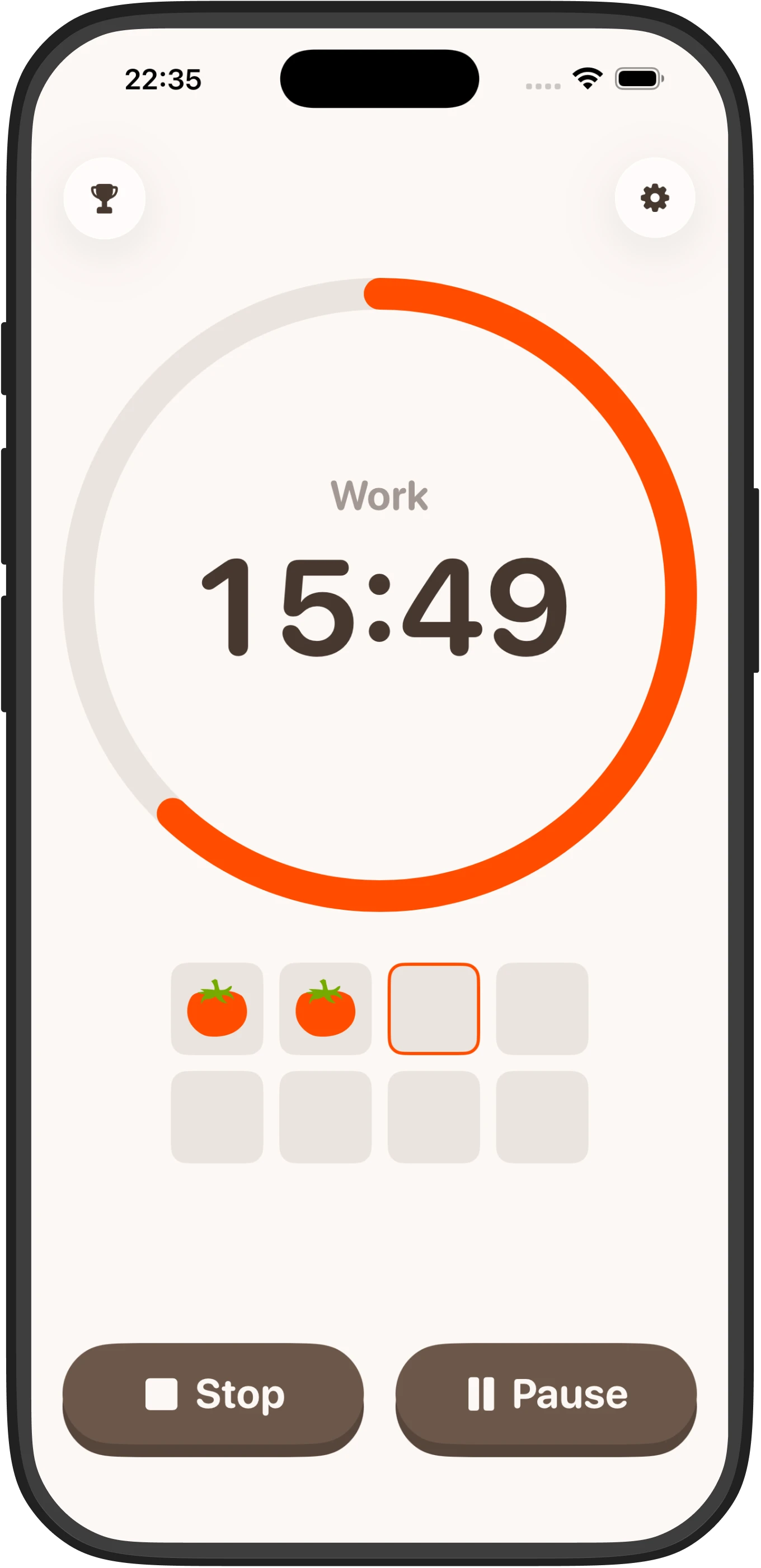
- Use a visual timer — something like Pomo’s iPhone app works well here since it keeps the countdown visible at a glance without pulling you into your phone
- Tell someone what you’re starting (accountability)
- Begin with the easiest part of the task, not the hardest
- Use body doubling if available (working alongside someone else, even virtually)
The hardest part of any task with ADHD is starting. Once you’re in motion, continuing is significantly easier.
Step 12: Backup Plan Activation
Here’s the secret that no other morning routine checklist tells you: you need a backup plan for when your brain simply won’t cooperate.
Some mornings, executive dysfunction wins. Your medication hasn’t kicked in, you didn’t sleep well, your anxiety is through the roof, or you just can’t make yourself do the thing. That’s not failure—that’s ADHD.
Backup plan options:
- Switch to your easiest task from Step 9
- Do a mundane physical task (cleaning, organizing, laundry) until your brain reboots
- Take a strategic break with a hard time limit (15-minute walk, not 3-hour YouTube spiral)
- Use an accountability partner or body doubling session
- Accept that today might be a lower-productivity day and adjust expectations
The point is to have a predetermined response instead of spiraling into shame and avoidance.
How to Actually Implement This Checklist
Reading this checklist isn’t the same as using it. Here’s how to bridge that gap.
Week 1: Pick three steps from this list that feel most manageable. Just three. Master those before adding more. Most people pick hydration, movement, and getting dressed because they’re concrete and have clear completion points.
Week 2: Add two more steps. You’re building a chain of habits, not trying to transform your entire life overnight.
Week 3: Add the remaining steps, but give yourself permission to modify them. If 10 minutes of exercise feels impossible, start with 5. If making your bed feels stupid, skip it. The checklist works because it’s flexible, not rigid.
Implementation tools:
- Print this checklist and laminate it or put it in a sheet protector so you can check off steps with a dry-erase marker
- Use a habit-tracking app that sends notifications (but turn off the guilt-inducing “streak broken” messages)
- Set phone alarms for specific steps until they become automatic
- Create physical cues (water bottle on nightstand, workout clothes laid out, breakfast protein in the front of the fridge)
Breaking work into manageable focus sessions with built-in breaks is the accountability structure that turns this checklist from theory into practice.
Common ADHD Morning Routine Mistakes to Avoid
Even with a solid checklist, there are pitfalls that trip up ADHD brains specifically.
Mistake 1: Making it too complicated. If your morning routine requires 17 steps and takes 3 hours, you will never do it consistently. Complexity is the enemy of execution.
Mistake 2: No buffer time. Build in 15-30 minutes of buffer time between your wake time and when you actually need to be functional. Your ADHD brain needs transition time.
Mistake 3: Rigid perfectionism. Missing a step doesn’t mean the whole routine is ruined. Do the next step and keep going.
Mistake 4: Ignoring medication realities. If your ADHD medication takes 45-60 minutes to kick in, don’t schedule complex tasks before then. Work with your neurochemistry, not against it.
Mistake 5: No accountability. ADHD brains need external accountability. Tell someone about your routine, use an app, join a body doubling session, or hire a coach.
Adapting the Checklist for Different Situations
This adhd morning routine checklist is a framework, not a prison. Here’s how to modify it for common scenarios.
For parents: Wake up 30 minutes before your kids if possible. Do Steps 1-6 before they’re up. The rest can happen in the chaos, but you need that dopamine boost and medication window first.
For remote workers: You don’t have a commute forcing you into structure. That’s dangerous for ADHD. Create an artificial “commute” by taking a 10-minute walk before sitting down at your desk. It signals to your brain that work time has started.
For shift workers: The same-wake-time rule gets tricky. Prioritize the steps that support dopamine (movement, hydration, protein) and let the timing flex as needed.
For people with comorbid anxiety or depression: Add a grounding technique to Step 5. This might be a breathing exercise, a gratitude practice, or a few minutes of meditation. The sensory routine helps