
If you’ve ever sat down to work and looked up two hours later having done almost nothing — you’re not broken. Research from Barkley et al. (2001) found that people with ADHD underestimate how much time has passed by 25–30%. Your brain genuinely doesn’t feel the clock ticking. That’s not a character flaw — it’s a measurable difference in how your brain tracks time.
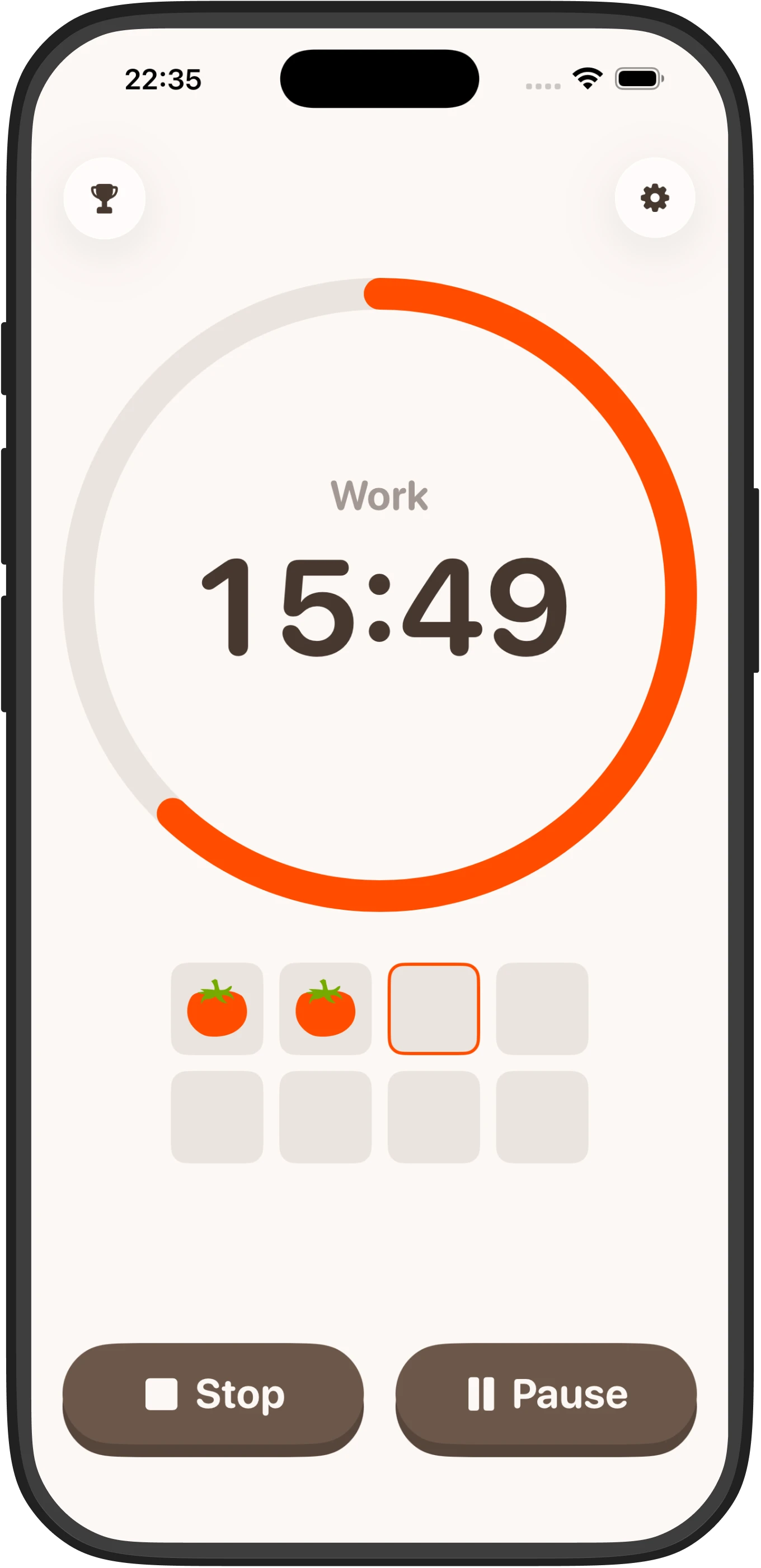
The good news: external timers compensate for exactly that. This Pomo ADHD Focus Timer beginner guide walks you through your first session from zero, with strategies built around how ADHD brains actually work.
Why 25 Minutes Isn’t an Arbitrary Number
The Pomodoro Technique splits work into 25-minute focus intervals followed by 5-minute breaks. For ADHD, this structure isn’t just convenient — it’s neurologically useful.
Research has found that completing short-interval tasks (25–30 minutes) can trigger dopamine reward cycles — which matters a lot when you have a hypoactive dopamine system. Finishing a focused block gives your brain a small but real chemical reward, which makes starting the next one easier.
A 2018 study in Education and Information Technologies with 52 undergraduate participants found 23% better task completion using Pomodoro intervals versus unstructured work — with stronger effects in people reporting ADHD symptoms.
Setting Up Your First Session
Here’s exactly what to do before you start your timer:
- Pick one task only — not a project, a single action (“write intro paragraph,” not “finish report”)
- Clear your phone screen of notifications — one distraction during a 25-minute block can cost you 10–15 minutes of re-focus time
- Keep water nearby — getting up for small things is a common escape hatch
- Decide what “done” looks like for this block before you start
This pre-session ritual matters. Task initiation is one of the hardest parts of ADHD executive dysfunction, and naming a concrete endpoint reduces the friction of beginning.
Starting the Timer and Staying on Track
When your session begins, the visible countdown does more work than you’d expect. Visible countdown timers have been shown to reduce off-task behavior in people with ADHD compared to silent work conditions.
This is where Pomo earns its place: the timer stays visible and prominent, so your brain always has a concrete anchor for how much time is left. When a distraction pops into your head, you can tell yourself “I’ll deal with that after the block” because you can see exactly how long that is.
During your first few sessions, aim for two or three blocks total — not eight. Consistency over marathon sessions is what builds the habit.
Taking Breaks Without Losing Momentum
When your 25 minutes end, take your break. Seriously — don’t skip it.
A 2011 study in Cognition by Ariga & Lleras found that 5-minute breaks after focused intervals restored attention capacity by 79% compared to continuous work — and there was no significant difference between 5-minute and 10-minute breaks. Short breaks work. Long breaks turn into scrolling spirals.
Good 5-minute break options:
- Walk to another room and back
- Drink water, stretch your neck
- Look out a window — distant focus relaxes your visual cortex
- Write down whatever random thought pulled at you during the block
Avoid: social media, news, anything with a feed. These reset your dopamine baseline in a way that makes returning to work noticeably harder.
What to Expect in Your First Two Weeks
Your first session might feel uncomfortable. That’s normal — sitting with one task for 25 minutes is a muscle, and it’s probably undertrained. Don’t judge the session by whether it felt easy; judge it by whether you finished the block.
The Pomodoro Technique has been shown to improve task completion rates when used consistently. The technique works faster than most people expect — but only if you actually run the sessions.
If you want a timer built specifically around ADHD habits — visible progress, streak tracking that doesn’t punish you for missing a weekend, and no subscription pressure — Pomo is free to download and worth starting with today.
FAQ
How long should my first Pomodoro session be? Start with two 25-minute blocks. That’s 50 minutes of focused work total, which is enough to build the habit without overwhelming yourself on day one.
What if I can’t focus for the full 25 minutes? Stay at your desk and keep trying until the timer ends, even if your mind wanders. Over time, the habit of returning your attention gets easier. Some people start with 15-minute intervals and work up.
Should I use a phone timer or a dedicated app? A dedicated focus timer is better because your phone’s default timer doesn’t show a visual countdown, and opening it exposes you to notifications. A purpose-built app keeps distractions one step further away.
What counts as a valid break activity? Anything that doesn’t involve a screen feed — stretching, walking, water, staring out a window. The goal is to rest attention, not redirect it to something equally stimulating.
How many Pomodoro blocks should I do per day when starting out? Two to four blocks is a reasonable target for beginners. Task fatigue can accumulate with intensive focus sessions — so shorter, consistent sessions beat long burnout days.