

You know exactly what you need to do. You’ve known for an hour. Maybe longer. You’re sitting in front of it — the document, the email, the form — and nothing happens. Your body won’t move. Your brain keeps circling without landing.
This isn’t procrastination in the lazy sense. It’s not a character flaw. It has a name — task initiation paralysis — and for people with ADHD, it’s one of the most disabling daily experiences there is. Research suggests that many adults with ADHD report chronic difficulty starting tasks, regardless of whether they want to do them or have the skills to do them.
That “regardless” is the key part. Capability is not the problem.
Why Your Brain Freezes at the Start Line
The short answer is dopamine.
Neuroimaging research has shown that people with ADHD have lower dopamine availability in the prefrontal cortex and striatum — the exact regions that handle motivation, planning, and getting yourself to do the thing you intend to do.
Dopamine isn’t just about pleasure. It’s your brain’s anticipation and action signal. When dopamine is low, the future reward of completing a task feels abstract and distant. Your brain essentially can’t generate enough “it’ll be worth it” to override inertia.
This is why “just start” advice fails completely for ADHD. You’re not choosing not to start. You’re working with a neurological system that genuinely struggles to generate initiation signals on demand.
It’s Not About Difficulty — It’s About How Aversive the Task Feels
Here’s something most productivity advice misses: for ADHD brains, what blocks initiation isn’t usually task difficulty. It’s perceived emotional aversiveness.
Research has found that task initiation paralysis correlates more strongly with how unpleasant a task feels than with how objectively difficult it is. Boring tasks. Tasks with unclear outcomes. Tasks tied to past failure. Tasks with someone you’re in conflict with.
The emotion comes first. Action follows — or doesn’t.
This reframes the whole problem. You don’t need to become more disciplined. You need strategies that lower the emotional activation cost of starting.
Strategy 1: Shrink the Threshold to Almost Nothing
The brain has a concept called activation energy — the mental cost required to begin a task. Reducing perceived activation energy improves task initiation in low-motivation states.
Practically, this means your “start” shouldn’t be the real task. It should be something so small it’s almost embarrassing:
- Open the document. Just open it.
- Write one sentence. Doesn’t have to be good.
- Set a timer for two minutes and work until it beeps.
The goal isn’t productivity. It’s bypassing the threshold. Once you’re in motion, the emotional cost drops sharply. Inertia works both ways.
Strategy 2: Use If-Then Plans to Remove Decision Load
At the moment of initiation, your working memory is already under strain. Any decision — even “how do I start this?” — adds load and increases the likelihood of freezing.
Implementation intentions — simple if-then plans — have been shown to increase task initiation success. The format is: If [situation], then I will [specific action].
Not “I’ll work on the report today.” Instead: “If it’s 10am and I’m at my desk, then I’ll open the report and write the first bullet point.”
The situation cues the behavior automatically, without requiring a fresh decision each time. For ADHD brains where executive function is already taxed, removing that decision point is significant.
Strategy 3: Create Immediate Consequences
ADHD brains discount future rewards steeply. Research has found that people with ADHD show greater delay discounting than neurotypical peers — meaning the further away a reward is, the less motivating it is. Tasks with immediate feedback are initiated faster.
You can hack this by attaching immediate, small consequences to starting:
- Tell someone what you’re about to do and check in with them in 20 minutes (body doubling works on this same principle)
- Promise yourself a specific reward that happens right after you complete the first 15 minutes — not at the end of the whole project
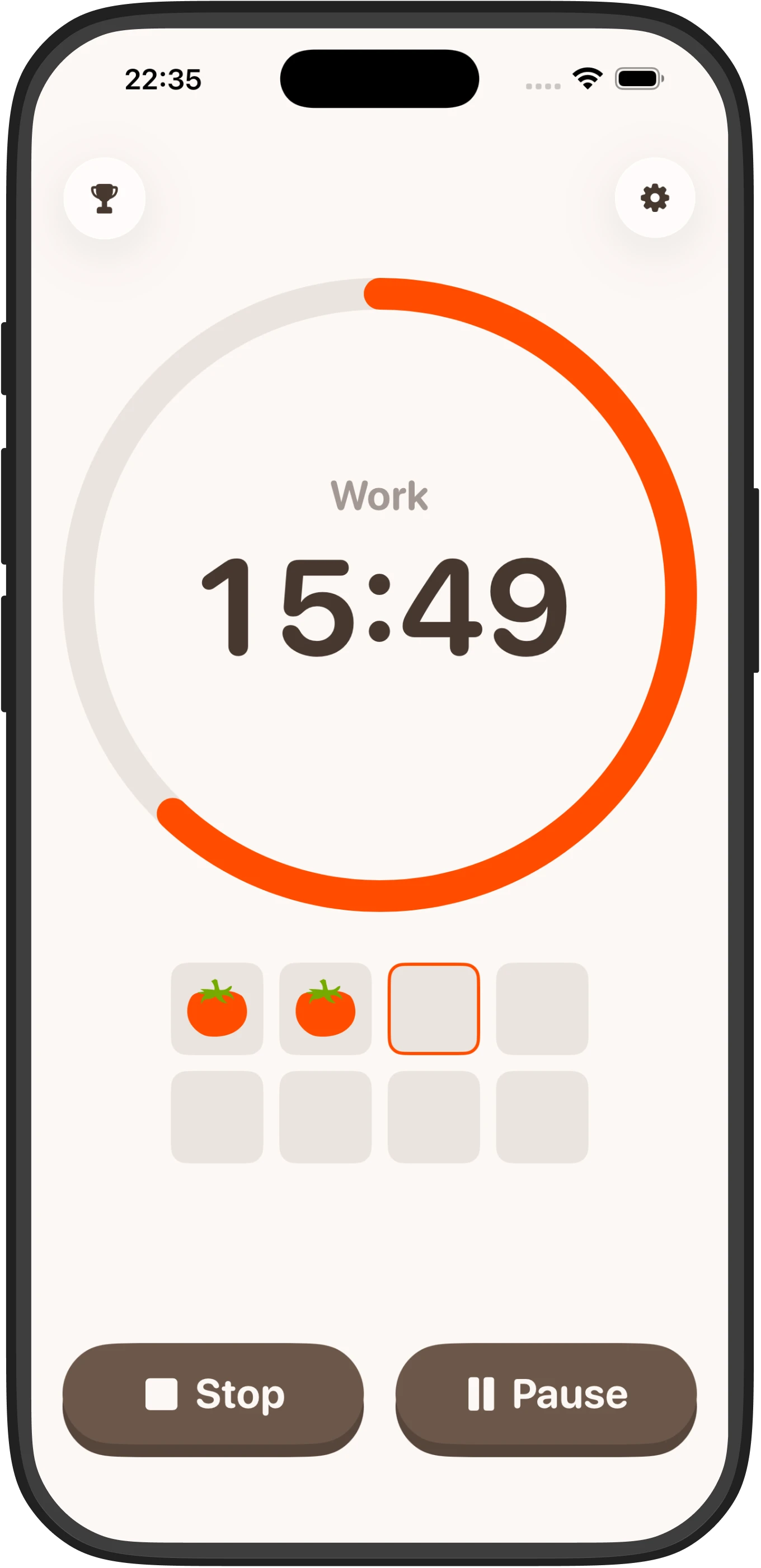
- Use a visible countdown timer so you’re watching time move in real time rather than abstractly
That last one matters more than it sounds. External time cues compensate for time blindness that makes ADHD initiation so hard — your brain isn’t generating the internal sense of urgency that neurotypical people experience.
Strategy 4: Reduce Environmental Friction Before You Need to Start
Environmental design is underrated. The more steps between you and the task, the more opportunities for the frozen moment to win.
If you need to work on a document tomorrow morning, leave it open on your screen tonight. If you need to exercise, sleep in your workout clothes. Every barrier you remove in advance is activation energy you don’t have to generate in the moment.
For cognitive work specifically:
- Close tabs and apps unrelated to your task before you stop for the day
- Write the first sentence or bullet point of tomorrow’s task tonight, while you’re still in momentum
- Put a physical object (notebook, specific book) on your desk as a cue
You’re essentially setting up a version of the if-then plan in your physical space.
Strategy 5: Work With the Dopamine System, Not Against It
Since low dopamine is the underlying mechanism, anything that briefly raises dopamine can lower the threshold for initiation. Research-supported options:
- Brief exercise. Even 10 minutes of movement increases dopamine and norepinephrine, which can improve executive function in adults with ADHD.
- Music with a fast tempo. Background music that engages without distracting can shift arousal state enough to trigger initiation.
- Novelty. Change your physical location, use a different tool, frame the task differently. Novelty is a dopamine trigger.
The point isn’t to feel motivated first. It’s to give your dopamine system a small nudge that makes starting possible.
Putting It Together: A 5-Minute Start Protocol
When you’re stuck, run this sequence:
- Name the smallest possible start — not the task, the first physical motion
- Recall your if-then plan (or make one now: “I will open [X] and write/do [specific thing] for 10 minutes”)
- Do a brief physical reset — stand up, walk
FAQ
What is task initiation paralysis and why does it happen with ADHD?
Task initiation paralysis is the inability to start a task despite knowing what needs to be done and having the skills to do it. It’s caused by low dopamine availability in the brain regions that handle motivation and planning, making it a neurological issue rather than a laziness or discipline problem.
Why doesn’t “just start” advice work for people with ADHD?
“Just start” advice fails because it doesn’t address the underlying dopamine deficit that prevents the brain from generating initiation signals. For ADHD brains, the problem isn’t motivation or willpower—it’s a neurological system that struggles to overcome inertia on demand.
What’s the difference between task difficulty and task aversiveness in ADHD?
Task initiation paralysis correlates more with how emotionally unpleasant a task feels than with how objectively difficult it is. Boring tasks, unclear outcomes, and tasks tied to past failure create emotional barriers that block starting, regardless of whether you have the skills to complete them.
How can I use if-then plans to improve task initiation?
If-then plans remove decision-making at the moment of starting, which reduces cognitive load. Instead of “I’ll work on the report today,” use specific plans like “If it’s 10am and I’m at my desk, then I’ll open the report and write the first bullet point.” This lets your brain execute automatically without requiring fresh decisions.
What immediate strategies can help when you’re stuck right now?
Try shrinking the threshold to almost nothing (just open the document), use a brief physical reset like standing and walking, do 10 minutes of movement to boost dopamine, or listen to fast-tempo music. These work because they lower the activation energy needed to start rather than trying to increase motivation through willpower.