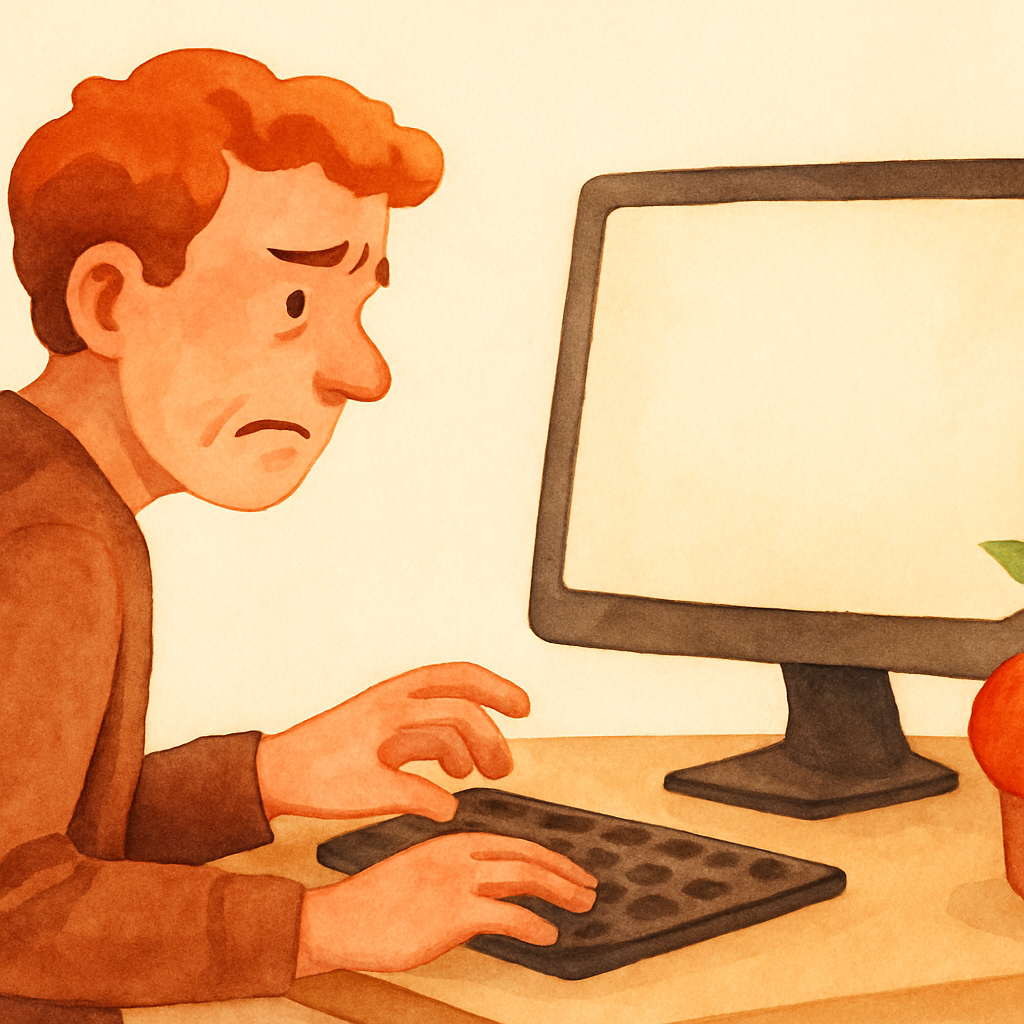

You have something important to do. You know you need to do it. You might even want to do it. And yet you sit there, unable to start — not because you’re lazy, not because you don’t care, but because something invisible is blocking the way.
That something has a name. ADHD coach and author Brendan Mahan calls it the Wall of Awful — the emotional barrier built from years of failure, criticism, and shame that stands between you and the first step of any task. It’s not a metaphor for mild reluctance. For many people with ADHD, it’s an almost physical experience of dread so intense it shuts down the ability to act entirely.
Understanding it doesn’t fix it overnight. But it does change what you try next.
What the Wall Actually Is
Most conversations about ADHD task initiation focus on executive dysfunction — the prefrontal cortex doesn’t regulate attention well, working memory is unreliable, planning is harder. All true. But that framing misses something crucial: why tasks feel threatening in the first place.
The Wall of Awful is built brick by brick over time. Every “you’re so smart, why can’t you just focus?” Every project you started and abandoned. Every deadline you missed despite good intentions. Every time someone said you weren’t trying hard enough.
Those experiences don’t just create memories. They create anticipatory shame — a pre-loaded emotional response that activates the moment a task appears on your radar. Before you’ve even tried, your nervous system is already cataloguing every past failure associated with this type of work. The task itself becomes a trigger.
This is why ADHD task initiation failure isn’t the same as procrastination in neurotypical people. In ADHD, the avoidance isn’t strategic delay. It’s a shame-driven freeze response.
The Science Behind Why ADHD Brains Are Especially Vulnerable
Emotional dysregulation is a documented feature of ADHD. A 2013 study by Surman et al. in the Journal of Attention Disorders found emotional dysregulation present in a significant proportion of adults with ADHD. Research indicates that shame and rejection sensitivity can predict task avoidance independently of attention deficits — meaning even on a good attention day, the emotional wall can still block the door.
A related aspect of this is Rejection Sensitive Dysphoria (RSD), an intense emotional reactivity to perceived failure or criticism that is reported in ADHD. Research in this area, including studies examining the relationship between RSD severity and task procrastination, supports the finding that shame anticipation can be a strong predictor of initiation failure.
That’s the Wall. It’s not about the task. It’s about what you expect to feel when you attempt it and fall short.
Why the Wall Gets Higher the Longer You Wait
Here’s the cruel irony: avoidance doesn’t reduce the shame. It amplifies it.
Research on temporal discounting in ADHD shows that ADHD brains may perceive delayed tasks as increasingly aversive over time. The emotional weight can compound. The longer a task sits undone, the more shame can attach to it, raising the wall further.
This explains a pattern many people with ADHD know well: the task you couldn’t face on Monday becomes genuinely unbearable by Thursday. Not because it got harder objectively, but because every day of avoidance adds another layer of “I really should have done this” — which translates to more shame, which raises the wall further.
There’s also an interoception component making this worse. Research suggests that some people with ADHD may show reduced interoceptive accuracy — the ability to notice and name internal emotional signals. In practice, this means shame can build and build without you consciously registering it until it’s already immobilizing you. You don’t notice the wall going up brick by brick. You just suddenly can’t move.
What Actually Helps: Breaking the Shame-Avoidance Loop
Research on cognitive-behavioral approaches to shame and avoidance suggests that shame-focused interventions paired with graduated task exposure can be effective. The key insight: shame reduction can come before behavior change, not after. You can’t will yourself over the wall. You have to work on the wall itself.
Here’s what that looks like practically:
Name the shame before you name the task. When you notice yourself avoiding something, try pausing and asking: “What am I afraid will happen if I try this?” Not “what’s wrong with me,” but what specific outcome are you dreading — looking stupid, confirming you’re incompetent, letting someone down. Naming the fear precisely reduces its ambient power. This is the interoception gap in action: most people are avoiding an unnamed dread. Naming it makes it smaller.
Separate the attempt from the outcome. The wall is built on outcome-based shame. “I failed, therefore I am a failure.” One reframe that appears in the literature: commit only to the attempt, explicitly detached from results. “I’m going to work on this for ten minutes. Whether it goes well doesn’t matter yet.” This sounds simple but directly targets the anticipatory shame mechanism — because shame anticipation requires imagining a bad outcome. If no outcome is on the table, the trigger weakens.
Use graduated exposure, not cold starts. Graduated exposure research suggests starting with the smallest adjacent action — opening the document, writing one sentence, finding the phone number you need to call. Not to trick yourself into working, but to genuinely lower the emotional stakes of contact with the task. Each tiny successful contact chips at the wall rather than demanding you scale it.
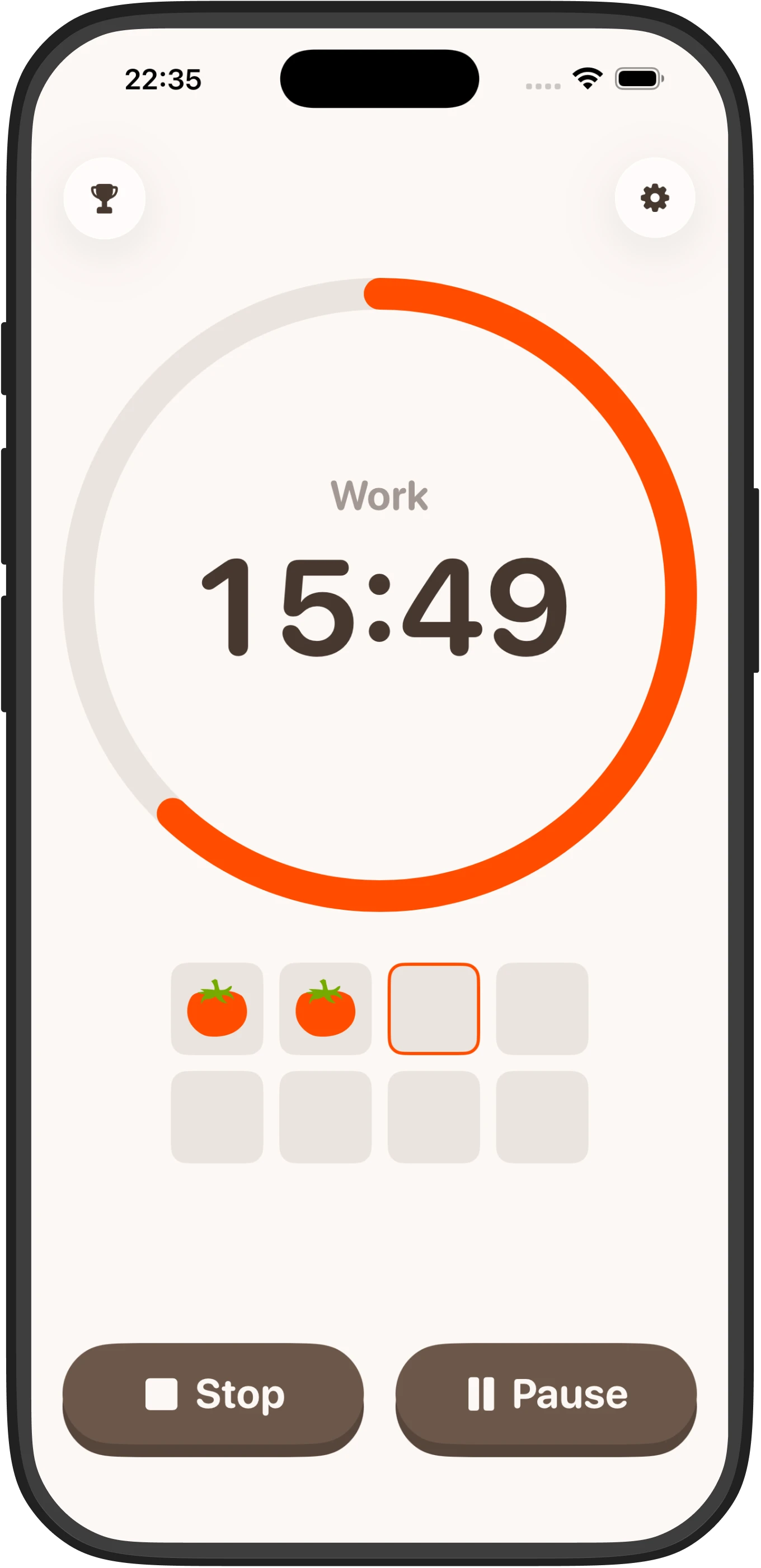
Externalize the starting signal. One practical tool that fits here: using a timer to mark the beginning of an attempt, not to enforce a session length, but to create a clear, external “now we’re starting” signal that bypasses the internal debate. If you find it hard to know when to begin, having something outside your head make the call can help.
Reduce novelty at the entry point. Novel situations can trigger stronger emotional responses because there’s no track record to reference. If you’re dreading a task partly because it’s unfamiliar, lower novelty by doing it in a familiar environment, at a familiar time, with a familiar sequence of micro-steps. The more predictable the experience leading up to the task, the less threat-signaling your nervous system has to process.
If you struggle with how to start a task when it feels impossible, the shame-naming strategy above pairs well with implementation intentions — the “when X happens, I will do Y” technique that research supports as a tool for reducing decision friction.
FAQ
What is the Wall of Awful in ADHD?
The Wall of Awful is an emotional barrier built from years of failure, criticism, and shame that blocks task initiation in people with ADHD. It’s not laziness or lack of motivation — it’s anticipatory shame that activates when a task appears, creating a freeze response rather than strategic procrastination.
Is the Wall of Awful the same as regular procrastination?
No. Regular procrastination is often strategic delay, but ADHD task initiation failure driven by the Wall of Awful is a shame-based freeze response. The avoidance isn’t a choice — it’s an emotional dysregulation issue where your nervous system perceives the task as a threat based on past failures.
Why does the Wall of Awful get worse the longer you avoid a task?
Avoidance doesn’t reduce shame; it amplifies it. Each day a task sits undone, another layer of “I should have done this” attaches to it, raising the emotional wall further. This is why a task that felt difficult on Monday can become genuinely unbearable by Thursday, even though the task itself hasn’t changed.
How do I break through the Wall of Awful?
Start by naming the specific fear or shame beneath the avoidance before trying to force yourself to work. Separate your self-worth from the outcome by committing only to attempting the task for a small time period. Use graduated exposure by starting with the tiniest action, externalize the starting signal with a timer, and reduce novelty by working in familiar environments with familiar routines.
Does reducing shame actually help with task initiation?
Yes. Research on shame-focused interventions shows that shame reduction can come before behavior change, not after. By naming the emotion precisely and reducing anticipatory shame, you lower the emotional barrier itself rather than trying to willpower through it, making initiation genuinely easier.