

Studying alone with ADHD is hard. Studying with other people — where every side conversation, phone buzz, and chair scrape competes for your attention — can feel impossible. But here’s the thing: group study doesn’t have to be a distraction minefield. When everyone commits to the same timed intervals, something shifts.
This is what happens when students use a shared ADHD group study timer to coordinate their sessions.
Why Synchronized Timers Change the Group Dynamic
When everyone starts and stops at the same time, the social pressure works for you instead of against you. Research on synchronized study timers and peer accountability has shown positive effects on sustained attention in group settings. The mechanism isn’t complicated: when your friend across the table is also in focus mode, opening Instagram feels visibly weird. You’re not white-knuckling willpower — you’re borrowing structure from the group.
Studies on visible timer displays have found that they reduce distractions during collaborative study sessions. The timer on the table becomes a shared contract.
The Executive Function Problem Group Study Actually Solves
ADHD isn’t just about distraction — it’s about task initiation. Getting started is often harder than staying focused once you’re in. Research has found that external time-structure cues like visual timers can improve task initiation in individuals with ADHD.
In a group setting, this cue gets amplified. When someone says “timer’s starting in 30 seconds,” your brain gets a concrete launch point — not a vague intention to “start soon.”
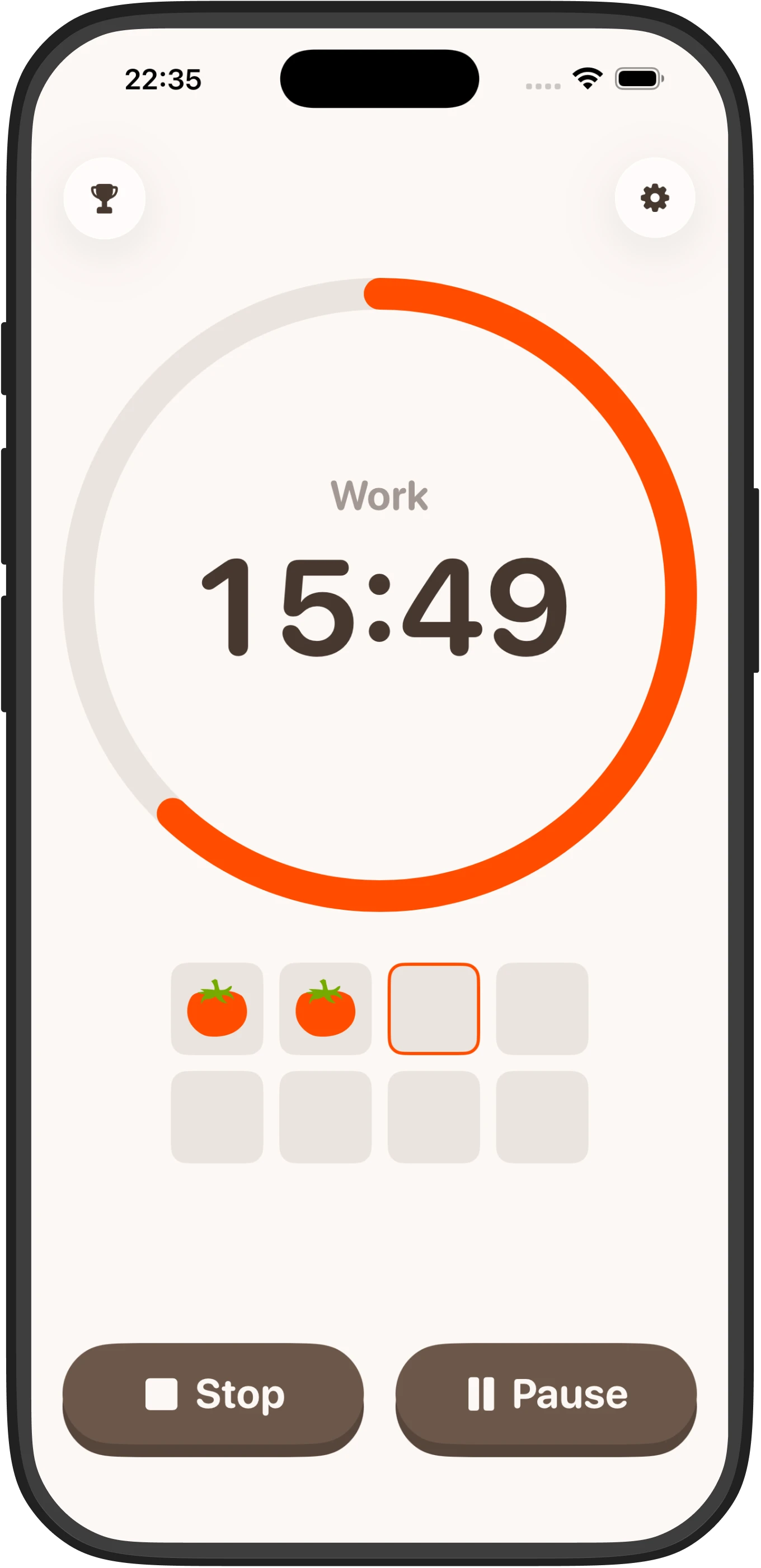
This is why Pomo’s clean countdown display works well in shared spaces. You can prop a phone in the center of the table, everyone sees the same timer, and the session starts without negotiation. Try it free.
How to Actually Run a Group Session with a Focus Timer
Here’s a straightforward format that works:
- Agree on a focus interval before anyone opens their laptop — 25 minutes is the standard Pomodoro length, but 20 or 30 works fine depending on the group
- One person starts the timer; everyone begins at the same moment
- No talking during the focus block — questions go on a sticky note or phone note for the break
- Take a 5-minute break together, then reset
- After four rounds, take a longer 15–20 minute break
The key is the together part. Research has shown that synchronized timer groups tend to complete more study sessions than students using individual timers alone. Accountability isn’t about pressure — it’s about shared momentum.
What to Do When Someone Falls Off
Someone will check their phone. Someone will start a conversation mid-block. That’s fine — the structure isn’t meant to be punitive.
The group agreement matters more than perfect compliance. A few practical guardrails:
- Put phones face-down in the center of the table during focus blocks
- Use a physical or on-screen timer everyone can see — not just one person’s earphones counting down
- Keep break conversations time-boxed; the 5-minute break is real, not a sliding window
- If someone needs to drop out early, they mute themselves rather than pulling the group off track
Research on ADHD behavioral interventions consistently shows that external structure — not internal motivation — supports attention regulation. Building that structure into the group format removes the burden from any one person.
Results Students Actually Report
The research findings align with what students describe qualitatively:
- Sessions feel shorter because the timer creates a defined endpoint to work toward
- Breaks feel earned rather than guilty
- Starting the next block is easier when someone else is also starting
- The group dynamic creates a low-stakes form of accountability — not judgment, just presence
If you want a timer that stays out of the way and makes group coordination simple, Pomo is worth trying — it’s free to start, with a $2.99 one-time unlock for custom timings and unlimited sessions.
FAQ
Can an ADHD group study timer really help with focus? Yes — research supports this. Synchronized timers add external structure that can support attention in group settings, and peer presence amplifies the effect.
How long should focus blocks be for group study sessions? Twenty-five minutes is the standard starting point. Some groups with ADHD find 20-minute blocks more sustainable, especially early in a session. Experiment with what the group can actually hold without someone breaking first.
What if one person in the group doesn’t have ADHD? It doesn’t matter much. The timer format benefits everyone — people also complete more work in structured intervals than in open-ended sessions. The group dynamic still applies.
Do you need a special app, or can you use a phone timer? A basic phone timer works. A dedicated focus timer app is better because it handles the interval sequencing automatically — you don’t waste two minutes of break time resetting and negotiating the next block length.
How many Pomodoro rounds should a group study session include? Three to four rounds is a practical target for a two-hour session. More than four rounds back-to-back tends to produce diminishing returns, especially for students managing attention difficulties across a long afternoon.