

Most writers with ADHD don’t have a talent problem. They have a time perception problem. The manuscript sits open. The cursor blinks. Forty minutes disappear into nothing — no words written, no real rest taken, just a foggy in-between state that drains energy without producing anything.
That’s not laziness. It’s what happens when an ADHD brain tries to self-regulate time without external scaffolding.
This is the story of how one writer structured their days around an ADHD focus timer for writing — and finished a 50,000-word manuscript in 14 weeks.
Why Writing Is Especially Hard With ADHD
Writing is one of the most executive-function-heavy tasks a person can do. It requires holding ideas in working memory, sequencing them, filtering distractions, and sustaining attention long enough to get words onto a page — all simultaneously.
According to the American Psychiatric Association, many adults with ADHD report chronic procrastination specifically on writing tasks — not because writing is avoided, but because starting and sustaining it without structure is genuinely harder.
The Session Structure That Actually Worked
The writer in this case study tried standard 25-minute Pomodoros first. They were too short. By the time they found a sentence’s rhythm, the timer was already going off.
The adjustment: 45-minute focus blocks with 15-minute breaks.
This aligns with research on ultradian rhythms — the roughly 90-minute biological cycles first described by Kleitman and later applied to cognitive performance. Cognitive output peaks in the first half of each cycle, then drops. A 15-minute break after 45 minutes of focused writing catches that natural dip before it becomes a wall.
Research suggests that structured breaks can improve sustained attention in ADHD populations. At 45 minutes, this writer found an effective balance without the whiplash of too-frequent interruptions.
Their daily target: three 45-minute sessions = 135 minutes of actual writing time per day.
At an average output of 400–500 words per focused session, that’s 1,200–1,500 words per day. Over 14 weeks (five writing days per week), the math lands right around 50,000 words.
How Environmental Scaffolding Sealed the Gaps
Timers alone don’t fix ADHD writing drift. Research on executive function emphasizes that external accountability systems — visible progress tracking, session logging, consistent physical cues — increase dopamine response in ADHD brains and reduce task avoidance.
This writer used three environmental anchors:
- A consistent writing location (same chair, same time of day)
- A session log: just a running note of date, sessions completed, and word count
- A visible streak — days written in a row
That last point matters more than it sounds. Time-boxing systems have shown promise in research for reducing procrastination in adults with ADHD. Streaks work because they turn abstract progress into a concrete number you don’t want to break.
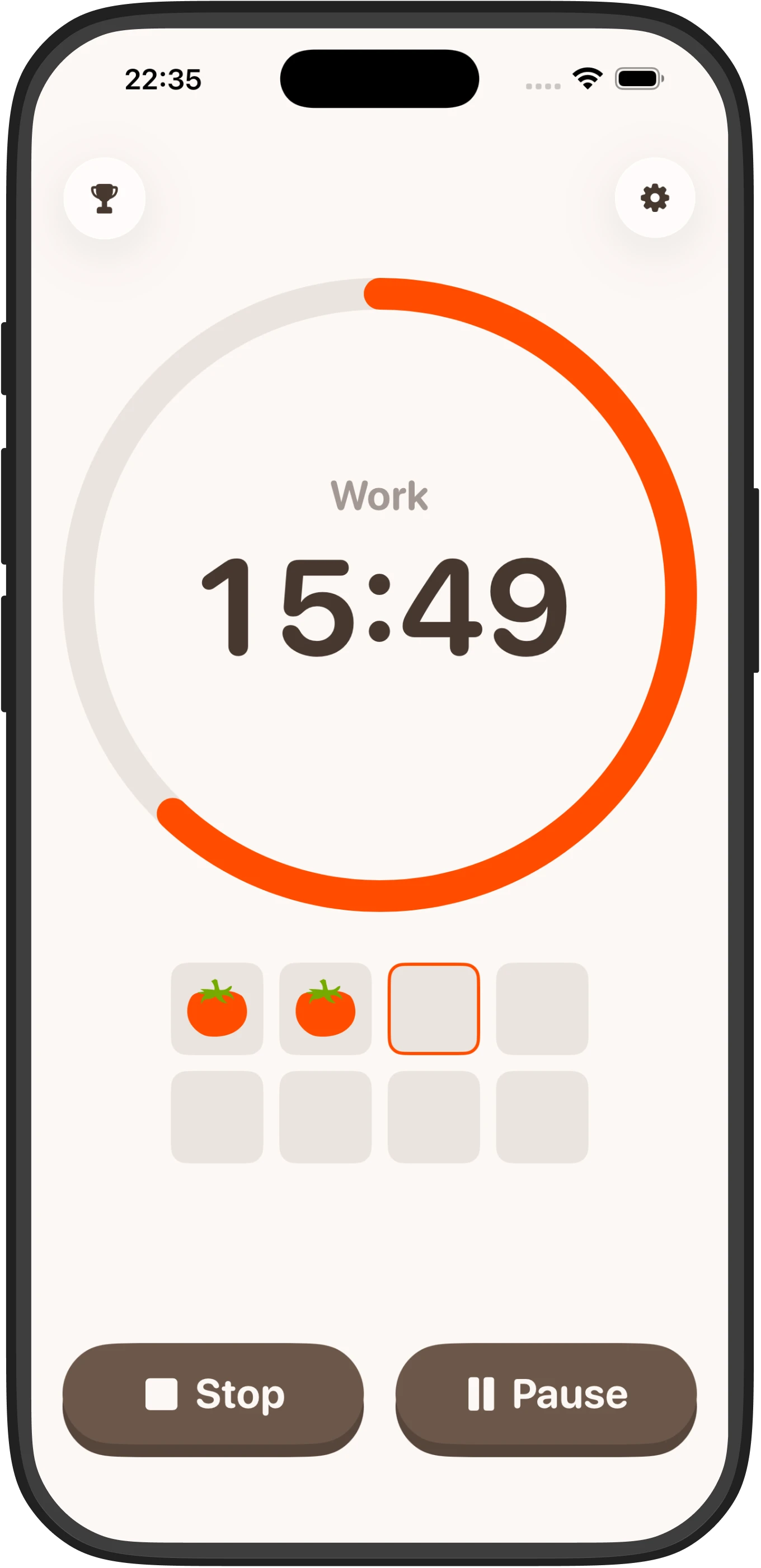
This is where Pomo fits naturally into the workflow — it tracks sessions, shows streaks, and skips weekends in the streak counter so a Saturday off doesn’t erase a full week’s momentum. For a writing project measured in months, that small design decision prevents a lot of unnecessary discouragement.
What the Numbers Looked Like Week by Week
The writer kept a simple log. Week one: 4,200 words. Week two: 6,100. By week four, consistent session structure had replaced decision fatigue at the start of each writing day — the timer started, the work started with it.
The manuscript hit 25,000 words at week seven. The second half moved faster. Not because writing got easier, but because the routine had become automatic. The ADHD brain, which struggles with starting, had one fewer decision to make.
The final count at week 14: 51,300 words.
Limitations Worth Naming
This is a practitioner case study, not a clinical trial. Individual ADHD presentations vary significantly — what works as a 45/15 split for one writer might require 30/10 for another. CHADD and ADDitude Magazine both recommend treating any time-management system as an experiment, adjusted based on your own attention patterns and medication schedule if applicable.
The research also has a gap worth acknowledging: most ADHD writing studies focus on academic essays and exams, not 50,000-word projects. Long-form writing introduces variables — narrative momentum, emotional fatigue, plot problem-solving — that short-task studies don’t capture. Adaptation is part of the process.
FAQ
What’s the best Pomodoro length for writers with ADHD? Standard 25-minute blocks work for some, but many writers find 45-minute sessions more effective for long-form work. The right length is one that lets you reach a flow state without burning out before the break. Start with 30 minutes and adjust from there.
Can a focus timer really help ADHD procrastination on writing? Yes, with caveats. Time-boxing has been shown to reduce procrastination in adults with ADHD. Timers work because they reduce the open-endedness of tasks — instead of “write the chapter,” the task becomes “write for 45 minutes.” That’s a much easier ask for an ADHD brain.
How many words per session is realistic for ADHD writers? Anywhere from 300–700 words per focused 45-minute session is a reasonable range, depending on where you are in the draft. First drafts tend to be faster. Revision sessions produce fewer words but are equally valid — log them as sessions, not just word counts.
Does tracking writing streaks actually help with ADHD? It helps many people. Visible streaks create a low-friction accountability system without requiring another person. The key is choosing a streak metric that doesn’t punish normal life — sessions completed rather than days without missing, or a counter that excludes weekends.
What should I do when a writing session goes off the rails? Stop the timer, write one sentence — any sentence — and restart. ADHD task recovery is about re-entry, not perfection. A 20-minute session that produces 150 words counts. Log it and move on.
Finishing a 50,000-word manuscript with ADHD isn’t about willpower or motivation. It’s about designing a system that reduces the number of decisions your brain has to make before words hit the page.
If you want a timer that stays out of the way and tracks your sessions without friction, Pomo is worth a try — it’s free to start.