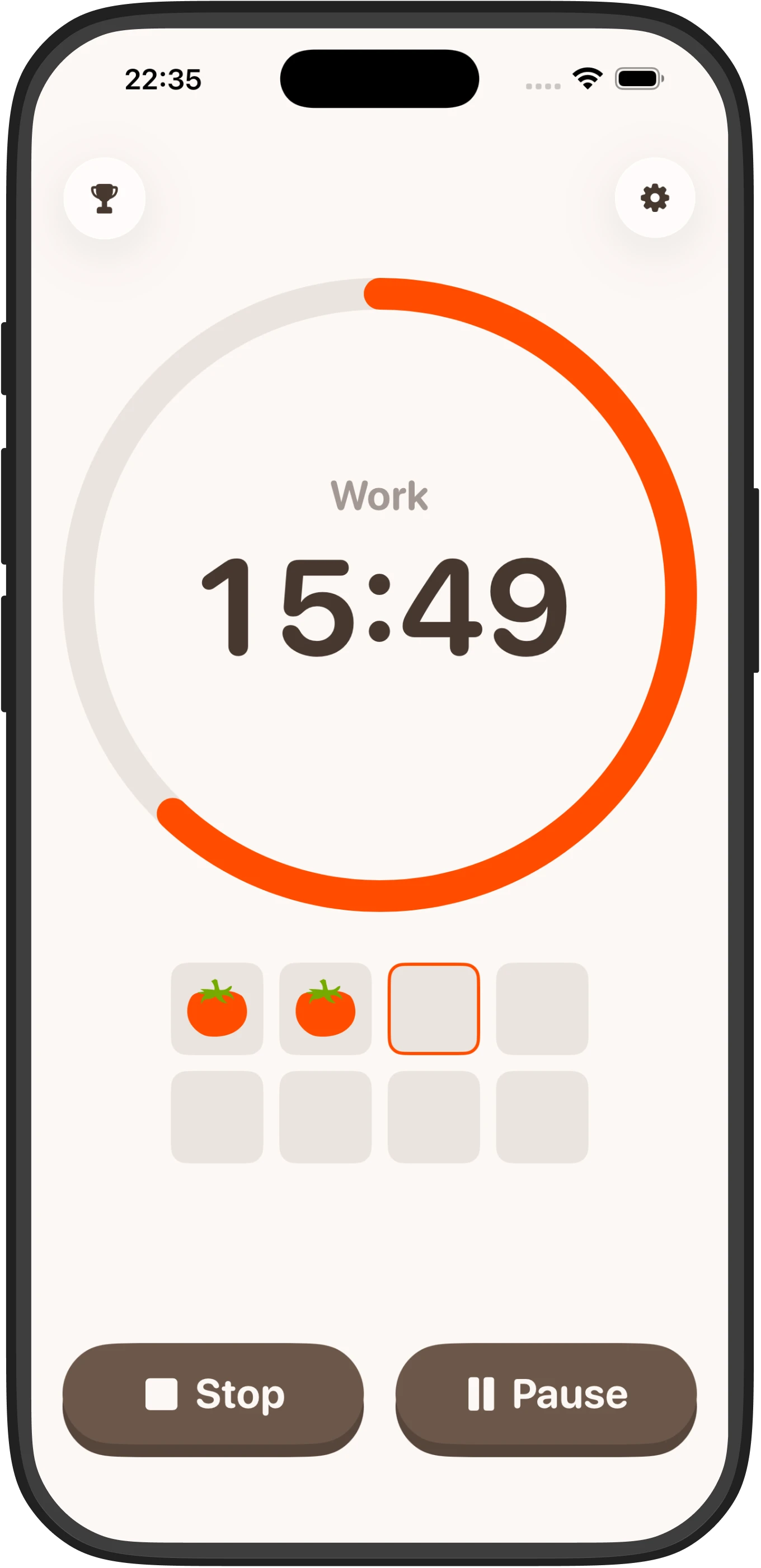


If you have ADHD, you’ve probably had plenty of “productive Mondays” that didn’t survive until Wednesday. The problem usually isn’t motivation — it’s that focus without structure evaporates fast. That’s where ADHD focus streaks come in: small, consistent sessions that stack up into something your brain actually starts to rely on.
Here’s what the research says, and how to make streaks work when your attention span fights you every step of the way.
Why Streaks Work Differently for ADHD Brains
ADHD involves differences in dopamine regulation. Research has found that ADHD is associated with altered dopamine function in brain regions like the prefrontal cortex, which handles planning, impulse control, and sustained attention.
What this means practically: your brain may benefit from more frequent reward signals to stay on task. A long two-hour work block gives you one payoff. Ten 25-minute Pomodoro sessions give you ten. Each completion acts as a micro-win, and streaks amplify that cumulative effect over days and weeks.
A 2014 study in the Journal of Attention Disorders found that external time structures — visible countdowns, structured intervals — reduced task-switching frequency in adults with ADHD. The mechanism is straightforward: abstract time (“work until you’re done”) is invisible to the ADHD brain. A countdown makes time concrete and manageable.
The Compounding Timeline: What Actually Happens Week by Week
This is where streaks get interesting — they don’t just help today, they change how your brain operates over time.
A landmark 2009 study by Lally et al. in the European Journal of Social Psychology tracked 96 participants building new habits over 12 weeks. Average habit formation took 66 days — not the popular myth of 21. But here’s the useful part: after day 21, behavioral consistency increased. The habit started becoming more automatic.
For ADHD, that automaticity matters even more. External accountability systems — visual tracking, timers — can support task completion for people with ADHD.
Here’s how the compounding arc typically looks:
- Weeks 1–2: You’re building timer familiarity. Willpower cost is high, sessions feel effortful, but you’re establishing the cue-routine loop.
- Weeks 3–4: The behavior starts becoming more familiar. Starting feels slightly easier — you’ve done this before, your brain recognizes the pattern.
- Weeks 8–12: Task-switching drops noticeably. Focus sessions feel less like fighting yourself.
- Month 4+: The streak becomes part of your identity. You’re not “trying to focus” — you’re someone who does their sessions. That identity shift supports sustained behavior change.
How to Build a Streak That Doesn’t Collapse
Most ADHD focus streaks fail in the first week for the same reasons: sessions are too long, the bar is too high, and one missed day feels like total failure.
A few things that actually help:
- Start with one session per day, not five. Consistency beats volume in the early weeks. One completed Pomodoro beats zero every time.
- Anchor it to an existing habit. “After I make coffee” works better than “at 9am” — time-based triggers are abstract, routine-based triggers are concrete.
- Make missed days survivable. Research consistently shows that missing one day doesn’t break habit formation — catastrophizing about it does. Give yourself a rule: never miss two in a row.
- Track visually. A streak counter you can see creates what researchers call a “don’t break the chain” effect. Visual progress activates loss-aversion psychology that makes streaks sticky.
This is exactly why Pomo skips weekends in its streak counter — missing Saturday shouldn’t undo four solid weekdays of work. The streak logic is built around realistic ADHD life, not an idealized productivity schedule.
Keeping Momentum When ADHD Throws Curveballs
Stress, bad sleep, unexpected obligations — these hit ADHD adults harder than most. Most people managing ADHD are doing it without consistent clinical support, which means your habit systems have to be resilient.
A few specific tactics:
- Shrink the session on hard days. A 10-minute session counts. The goal on difficult days is keeping the streak alive, not hitting peak output.
- Use a pre-session ritual. Even 60 seconds of the same action before you start — closing tabs, putting on headphones, opening your timer — signals your brain that focus time is beginning.
- Celebrate completions explicitly. Don’t just log the session and move on. Pause, notice that you did it. Your dopamine system needs that acknowledgment, especially early in streak-building.
If you want a timer that handles the tracking without adding friction, Pomo is worth trying — it’s free to start, with a one-time $2.99 unlock for unlimited sessions and custom timings.
FAQ
How long does it take to build an ADHD focus streak? Most research points to 66 days as the average for habit automaticity — not 21. For ADHD specifically, the first 21 days are the hardest because behavioral patterns are still forming. Expect it to feel effortful for at least three weeks before it starts feeling routine.
Does the Pomodoro technique actually work for ADHD? Research supports interval-based work for ADHD specifically. A 2014 study in the Journal of Attention Disorders found external time structures supported sustained attention in ADHD adults. The short intervals also provide frequent completion signals, which matter for motivation.
What counts as a “focus streak” — does missing one day reset everything? Habit research says no — one missed day doesn’t break formation. The important rule is: never miss two days consecutively. A single gap is recoverable; a pattern of gaps restarts the automaticity clock.
How many Pomodoro sessions per day is realistic for someone with ADHD? One per day is a legitimate starting point. Building the consistency habit matters more than volume in the first month. Once sessions feel automatic — usually around week 4–6 — you can increase without it feeling like a willpower battle.
Why do focus streaks feel harder for ADHD than for neurotypical people? Because ADHD involves executive function differences — planning, initiation, and sustained attention require more cognitive effort. Streaks compensate by externalizing accountability and creating behavioral automaticity. Once the habit is wired in, it can reduce some of the initiation difficulty that makes starting tasks challenging.